-
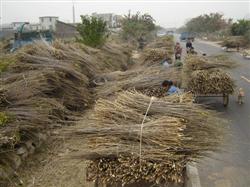
How is Lingzhi (Ganoderma) cultivated using mulberry branches? A detailed guide to the growing technique
How is Lingzhi (Ganoderma) cultivated using mulberry branches? Please explain the method. To grow Lingzhi using mulberry branches, you can refer to the following method: 1. Mulberry branch Lingzhi cultivation method. The artificial cultivation process for mulberry branch Lingzhi is: collecting mulberry branches - cutting into sections - crushing - blending ingredients - bagging - sterilization - inoculation - cultivation management - harvesting Lingzhi - sun-drying...
-
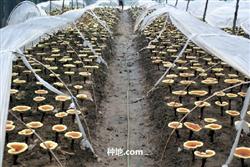
Can mulberry branches be used to cultivate reishi mushroom?
Can mulberry branches be used to cultivate reishi mushroom? What should be noted? The differences between mulberry branch cultivation technology for reishi mushroom and general reishi mushroom cultivation methods are mainly shown in: reishi mushroom strains, substrate formula and cultivation period, cultivation mode, and other aspects. 1. Screening of reishi mushroom strains Through introducing from Guangdong, Fujian...
-

Detailed Technical Points for Cultivating Reishi Mushroom with Mulberry Branches
Mulberry is a woody plant, and mulberry branches are the largest by-product of sericulture production. The degree of lignification of mulberry branches is moderate, and besides being usable as a high-quality paper raw material, they are suitable for use as a culture medium for edible and medicinal mushrooms. Mulberry branches themselves are a commonly used traditional Chinese medicinal material. The medicinal mushroom reishi (Ganoderma lucidum) cultivated with mulberry branches - mulberry branch reishi - is better than reishi cultivated with mixed wood sawdust and log wood. After mulberry branch reishi came on the market, its price is more than 50% higher than ordinary reishi. The technical points for cultivating reishi with mulberry branches are introduced as follows: 1. Cultivation techniques The artificial cultivation technical process for mulberry branch reishi is: mulberry
-
The correct method for winter pruning of honeysuckle branches
Honeysuckle (Lonicera japonica) is a semi-evergreen twining shrub with a well-developed root system and tolerance to drought and poor soil, making it an ideal plant for soil and water conservation. The pruning of honeysuckle varies depending on the planting form, site conditions, and management level. Its winter pruning techniques are introduced as follows: 1. Pruning period. Winter pruning of honeysuckle is best carried out from December each year to early March of the following year. 2. Pruning methods. 1. Pruning of young plants. Pruning of young plants focuses on shaping, with emphasis on developing primary, secondary, and tertiary scaffold branches to form a sturdy framework and lay the foundation for future high yields.
条件筛选