-

Mounting Inventory Makes Stored Grain Hard to Sell, 100 Billion Jin of New Grain Urgently Needs Placement
Right now is an important transition period in the grain circulation sector, as the summer grain purchase wraps up and the autumn grain purchase begins, but many places have recently run into grain storage difficulties. On October 8, the State Administration of Grain issued a notice, using two "unprecedented" phrases to describe the current grain storage situation:
-
Beijing corn to be trial-planted on 10 million mu of farmland next year
Corn, with a planting area of 550 million mu, is one of China's most important crops. For a long time, corn sowing and harvesting have relied entirely on manual labor, and only American corn varieties could be fully mechanically sown. Next year, 10 million mu of farmland in China will be fully mechanically planted with Beijing
-
CAS to Help Bohai Rim Region Increase Grain Output by 10 Billion Jin in the Next 5 Years
XINHUA NEWS SHIJIAZHUANG, May 27 (Reporter Gao Bo) According to Dr. Liu Xiaojing, director of the Nanpi Station of the Chinese Academy of Sciences, the construction of the demonstration zone of the "Bohai Granary Science and Technology Demonstration Project," a major national science and technology support program, will greatly enhance the grain production capacity of the low- and medium-yield fields around the Bohai Rim.
-
According to statistics bureau data, total grain output increased by 10.3 billion jin in 2014
Xinhua News Agency, Beijing, December 4 (Lu Chao) According to a message released on the website of the National Bureau of Statistics on the 4th, based on the National Bureau of Statistics' sample survey of agricultural production and operation households in 31 provinces (autonomous regions and municipalities) nationwide and comprehensive statistics on agricultural production and operation units, the national total grain output was 607.099 million tons (1
-
China's annual post-harvest grain loss exceeds 100 billion jin, and conservation brooks no delay
The Anhui Modern Grain Logistics Center has not only built tall flat warehouses, squat silos and other new types of storage facilities, but also adopted mechanical ventilation grain storage technology, pressed-cover airtight grain storage technology, circulation fumigation technology, grain cooling technology, computer-based grain condition monitoring technology and grain
-
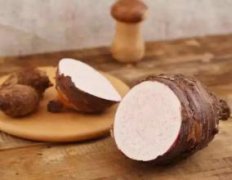
When is the best time to plant taro? Detailed guide to high-yield techniques for over 10,000 jin and market prices
Taro is now grown fairly widely. Do you know what the current yield per mu of taro is? So how should you plant it to achieve high yields? What is the current market price of taro per jin, and what are the prospects for growing taro? Now common
-
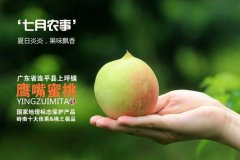
Lianping Shangping eagle-beak honey peach opens for picking and goes on the market in July, 10 yuan per jin, reachable by navigation
If you look for the Lianping eagle-beak honey peach base on your phone's map and navigation apps, you will find three results, but in fact the results are not accurate; two of the places, when you get there, have only a few mu of peach trees past their season. If you search for Lianping Shangping eagle-beak honey peach on your phone, you will find that it is still 12 km after getting off the expressway. In fact, as soon as you exit the expressway, you get the feeling of having entered the eagle-beak honey peach production area. Right away the roadside is lined with eagle-beak peaches, and you do not really need to enter the base itself; just find one or two orchards right by the roadside, 10 yuan per jin, while the price on the Guangzhou market at the same time is 11.8, but in the market you will find that in fact many are not from Lianping eagle-beak honey peaches and are replaced with those from other places.<br /> <img alt="Lianping Shangping eagle-beak peach" src="/uploads/allimg/190730/1-1ZI0142GLY.jpg" style="width: 730px; height: 487px;" /><br /> <br /> <div> The soil in Lianping County, Heyuan City is acidic, and winter is not very cold and not long, an environment relatively suitable for honey peach growth. Each town, based on this natural resource advantage and combined with the local farmers' traditional habit of growing honey peaches, put forward the rural economic development idea of “hope lies in the mountains, wealth lies in the mountains”. Among the many fruits of Lianping, the eagle-beak honey peach is famous both inside and outside the county for its large fruit, clear sweetness, crispness and honey flavor, and is favored by consumers. Through extensive market surveys and research by agricultural experts from the province, it was confirmed that the honey peaches of Shangping Town and Beitou Town are rare fine varieties in the whole province. Therefore, honey peach planting was vigorously promoted, and honey peach production was designated as the characteristic economy of Lianping County's “one town, one product”.</div> <div> </div> <div> Before 2002, Shangping Town, Lianping County, Heyuan City had 4,000 mu of honey peach base. In 2003, Shangping Town completed the land preparation and planting task for 6,000 mu of eagle-beak peaches and began preparing to build the 10,000-mu honey peach base in the Jiulian Mountains. In order to give full play to the brand effect and realize industrialized operation, Shangping Town, with strong support from the county party committee, county government and relevant departments, set off a boom in honey peach planting throughout the town. Starting in September 2003, in less than three months, Shangping Town completed 4,350 mu of land preparation and hole digging, and base construction was unprecedentedly fast. The masses' enthusiasm for planting honey peaches ran high; in Zhongcun and Gukeng of Shangping, nearly 1,000 people went up the hills every day to prepare land and dig holes. From 2003 to 2005, Shangping Town mobilized the masses to expand planting by more than 10,000 mu. The honey peach planting project in Shangping Town implemented the policy of unified planning, contiguous development and household operation, which fully mobilized the enthusiasm of farmers. With the Jiulian Mountain eagle-beak honey peach base as the center, it spread to surrounding villages, forming a pattern of “every village has a base, every household has an orchard”, reaching more than 1 mu of peach orchard per person, making Shangping Town a veritable honey peach specialized town.<br /> </div> <div> At the same time, at the end of 2002, Beitou Town, Lianping County, Heyuan City also began planting eagle-beak peaches, and by 2005 several hundred mu of fields or hillside land had also been planted with eagle-beak peach trees. To this day, planting in Beitou Town has also reached over a thousand mu. This completed the goal of the eagle-beak peach base radiating toward the northwest of the Jiulian Mountains.</div> <div> In 2005, Shangping Town was rated by the relevant national departments as “China's Hometown of Eagle-Beak Honey Peach”. In October 2011, at the “Top Ten Excellent Fruits of Lingnan” award ceremony held in Deqing, Zhaoqing, the Lianping eagle-beak honey peach received this honor. The “Lianping eagle-beak honey peach” is currently the best peach variety in Guangdong and even southern China, and has been praised by agricultural experts as the “best of peaches”.</div> <br /> <br />
-
High-Yield Ginger Cultivation Techniques for a Yield of 10,000 Jin per Mu
Abstract Select high-quality, healthy ginger tubers free of pests and diseases as seed stock, carry out sun-drying of the ginger and resting of the seed in early March, then carry out fine land preparation and apply sufficient basal fertilizer, soak the sun-dried ginger seed with pesticides such as Jiangwensan and Shengjiangbao, then air-dry and sprout them, and when the ginger sprouts grow to 0.5-1cm
-
How is white wood ear cultivated? Its market price can reach 100 yuan per jin
White wood ear is also called white fungus. Its appearance is white in color, crystal clear, and flawless like white jade. Its market price reaches about one hundred yuan per jin. White wood ear has strong resistance to contamination and high biological efficiency. It is twice the yield of black wood ear, and its cultivation benefits are high. So how is white wood ear, whose market price can reach
-
What are the benefits of Tiepi Shihu (Dendrobium officinale) at 100,000 yuan per jin, and how do you eat it for the best effect? Can it be taken long-term?
Tiepi Shihu, also known as Heijiecao, is a precious Chinese medicinal herb that grows on semi-shady, damp rocks. Because it has effects such as lowering blood sugar, lowering blood lipids and detoxifying, it is widely used as a health tonic. It is currently sold on the market, and the price is on the expensive side, so what about Tiepi Shihu at 100,000 yuan per jin
条件筛选