-

After repotting an orchid and changing the growing medium, never change the soil again within 2 years
Everyone knows that orchids are a type of perennial herbaceous plant, and their growth rate is relatively slow. Like other plants, orchids also need a relatively stable environment to grow, which means the growing medium in the pot and the surrounding environment need to be relatively stable, and frequent repotting and soil changes are not suitable. By providing the orchid with a relatively...
-
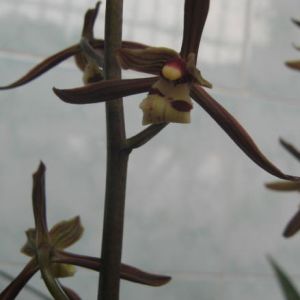
Golden-tipped Cymbidium sinense: An Introduction to the Cymbidium sinense Variety with Golden Leaf Tips
Golden-tipped Cymbidium sinense is a variety of Cymbidium sinense (Chinese orchid), named for the golden-yellow color at the tips of its leaves. It is a perennial herb. It has 4-5 leaves, clustered on oval pseudobulbs, with sword-shaped, dark green leaf blades. The flower stems are upright, rising above the leaves, and bear 7-17 flowers.
-

Give your flowers artificial respiration, and the leaves will be as green as emerald, with no root rot even after 20 years of growing
Many flower lovers, especially beginners with little experience, accidentally end up causing root rot in their plants. What is going on? In most cases, it is because the soil is too poorly aerated, literally suffocating and rotting the roots! Today, Huahua is going to teach everyone how to give flowers "artificial respiration," so the roots can freely breathe fresh air and grow thick and strong, and the leaves can shine bright green!
-
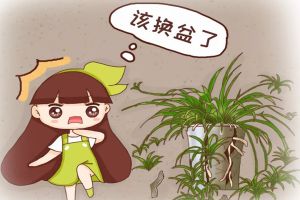
As the weather warms up, you need to hurry with repotting your flowers, otherwise they'll have no room to grow vigorously.
If you want your flowers to grow well and thrive, repotting is an essential step. Now is the best time to repot, so don't wait any longer. Hurry up and loosen the soil and repot your flowers~ Today, Huahua will explain everything about repotting, so let's take a look~
-
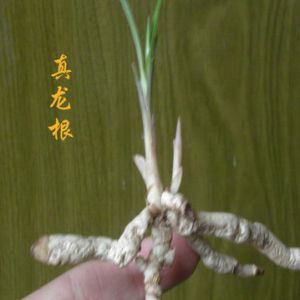
What is the story with orchid dragon roots and dragon eggs?
When orchid growers talk about orchids, the conversation never ends, and the center of discussion is often who has brought down another fine orchid from the mountains, and whether the plant carries a "dragon root." And every time "dragon root" comes up, it is only mentioned in terms of whether it is an authentic wild-collected seedling, and that seed-grown plants (seedlings) are worth more. However, we orchid growers...
-
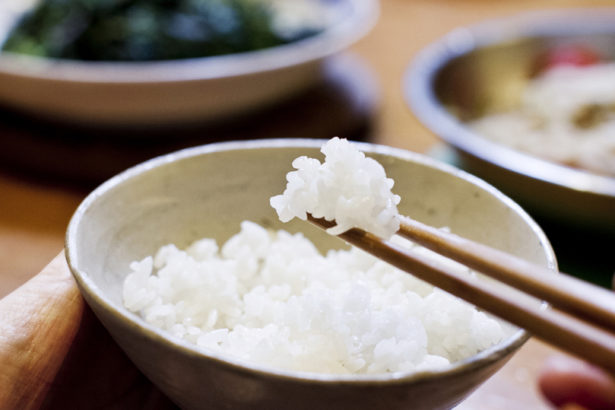
Taiwan rice found to exceed inorganic arsenic limits in Hong Kong, traders cry foul, Agriculture and Food Agency says safe with no concern
Taiwan rice found in Hong Kong to exceed inorganic arsenic limits? Traders cry foul, Agriculture and Food Agency: Taiwan rice is safe with no concern
-
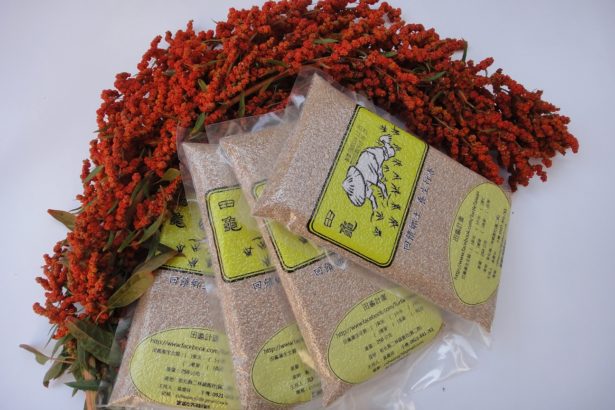
Red quinoa grows with just water? Get to know this distinctive crop
The red quinoa that only drinks water
-
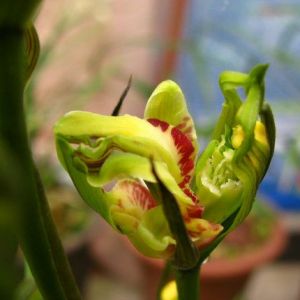
A detailed explanation of methods for identifying Cymbidium faberi varieties, teaching you to distinguish varieties with ease
One of the ten great odd flowers of Cymbidium sinense: an odd-form flower with "multiple noses" and "multiple tongues." Although quite a few odd-form flowers have been found in this province, no similar variety can be found; its unique distinction is that it maintains a "standard flower form" while still having variation, combining the classical and the novel, and it is very popular among lovers of odd-form flowers. This type has large flowers, plump and moist petals, multiple noses, multiple...
-
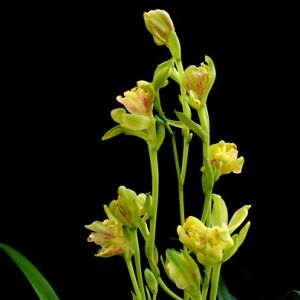
Jiazhou Qi Cymbidium: A Rare Orchid Variety with Unique Characteristics
Jiazhou Qi: Easy to cultivate, vigorous in growth, with a high germination rate. The pseudobulbs are extra large and colorful, with slanted upright leaves; when the plant is strong, it can reach 5 leaves, leaf width up to 15 mm, and leaf height 30 to 45 cm. When the grass buds emerge from the soil, the bud color is a mix of red and green, the sandy halo is soft and lustrous, and the bud shell tips often show white emulsification with curled heads. Before the leaves open, the main vein and leaf edges turn red; the flower bud sheath is dark red with a sandy halo and good color. The flower stem is a lamp-wick stem with especially strong upright growth; the flower scape is tall and rises above the leaves, reaching 50 to 60 cm, majestic and imposing; the flower is a jade-tree type forked flower, mainly cauliflower yellow with multiple petals, a colorful wonder flower, opening facing upward; when fully blooming, the petals can reach more than 20, combining plum, butterfly, wonder, and color in one, with a charming, elegant, and graceful flower posture; the flowering period lasts about 25 days and the flower shape remains stable, with excellent flower retention, lofty spirit and style, and a pure, long-lasting fragrance. It can be called a treasure among four-season orchids. Therefore, when this flower first participated in the 2006' China Leshan Four-Season Orchid Expo jointly held by China and South Korea, it attracted the attention of many orchid enthusiasts, received unanimous praise from expert judges, and won the Special Gold Award!
-
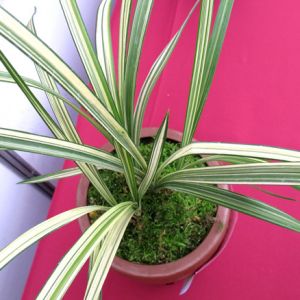
Characteristics and Appreciation of the Spring Orchid (Cymbidium tortisepalum) with Central Transparent Variegation
Spring Orchid with Central Transparent Variegation, Special Gold Award at the 22nd China (Zhenhai) Orchid Expo, submitted by Lianhua Town, Chenghai District, Shantou City
条件筛选