-

What to Do When Jujube Seedlings Wilt? A Detailed Guide to Practical Solutions
Recently, many farmers have reported that some jujube seedlings planted this spring gradually wilted when their new shoots grew to 10-20 cm, until they dried up completely. Our analysis suggests: 1. From the perspective of climatic conditions, this is related to this year's unusual climate, such as low temperatures and sandstorms. In mid-April after the jujube seedlings were planted, our city experienced a period of low-temperature weather lasting about a week, with the lowest temperature below 10 degrees. The low ground temperature caused poor root activity, and the frequent sandstorms this spring also caused excessive transpiration in the newly planted jujube seedlings, resulting in water loss and wilting.
-
What to Do When a Rabbit Is Poisoned by Organophosphorus Compounds
This disease is a poisoning condition caused by domestic rabbits accidentally eating vegetables, grains, plant seeds or field weeds that have been treated with organophosphorus pesticides, or by improper medication when treating external parasites. Organophosphorus compounds include trichlorfon, dichlorvos, 1605, 1059, 3911, dimethoate, malathion, dithion, and many others. 1. Clinical symptoms: symptoms appear within 0.5 to 4 hours after contact with the poison, showing loss of appetite, drooling, tearing, constricted pupils, rapid heartbeat, rapid breathing, and generalized muscle tremors,
-
Four key points to note when introducing pet rabbits
As the pet rabbit market grows increasingly prosperous, more and more people are introducing pet rabbits, but all kinds of problems have emerged along with this. Some people spend a lot of money to buy so-called pet rabbit breeding stock, only to find that when the breeding season arrives, the rabbits do not come into heat; after inquiring carefully, they learn that the rabbits have been sterilized and simply cannot reproduce, wasting more than half a year for nothing. Some people buy rabbits that cannot survive at all, because no breeding techniques were provided, so they just feed them like ordinary rabbits; the result is that a sudden change in living conditions, combined with an abrupt switch in feed, causes the young rabbits to fall ill and die one by one.
-
Six things you must do when raising rabbits in autumn
1. Adjust the daily ration. According to the different ages of rabbits, prepare it according to feeding standards, appropriately increase the protein level, reduce energy feed, and require the feed to be nutritious, palatable and easy to digest. Ensure that rabbits have sufficient green feed every day, such as green grass, green vegetables, etc. 2. Build up autumn fat. With abundant feed and complete nutrition, build up good autumn fat to survive the winter safely. Therefore, prepare complete and abundant feed and supply high-quality green feed; feed at fixed times and in fixed amounts, following the principle of feeding breakfast early, feeding dinner late, feeding more green feed at lunch, and feeding at night. Young rabbits should be fed 5-6 times a day
-
How to increase the survival rate when propagating geraniums
Geraniums are mainly propagated by cuttings. To increase the survival rate, you must master the following points: (1) Selection of cuttings. Choose branches that are solid inside and have a small cut surface as cuttings. The specific method is to pinch off the growing tip of the mother plant in advance, and after new side branches emerge, cut the branch from the base of the new side branch, close to the mother branch. (2) Cutting time. Cuttings are generally taken in mid-September. If the cuttings are not newly grown side branches, the cut cuttings must be left to dry for at least a whole day.
-
What to do when the medicinal plant Panax notoginseng gets root-knot nematode disease
Symptoms After the roots of Panax notoginseng are invaded by nematodes, the root cells are stimulated by the nematodes and produce tumor-like galls of varying sizes. Both the main root and lateral roots can become deformed and form galls. The small ones are 1-2 mm, and the large ones can turn the entire root system into a single tumor-like mass. After being infected for a longer time, the plant's branches and leaves turn yellow or fall off. Pathogen Meloidogyne incognita (Kofoid et White) Chitwood, called the southern root-knot nematode. The pathogenic nematode is sexually dimorphic, and the larvae
-
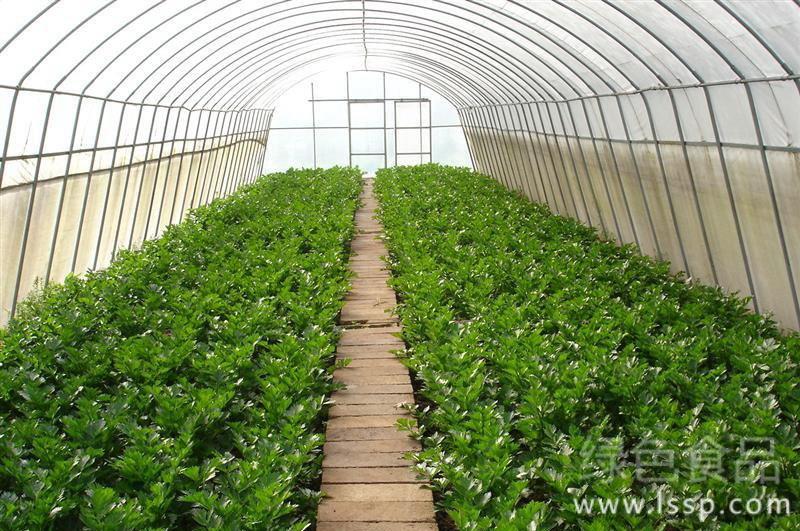
Six common mistakes to avoid when changing greenhouse film, vegetable growers should steer clear of them
Six common mistakes vegetable growers make when changing greenhouse film
-
Use Sulfonamides with Caution When Treating Infectious Coryza in Chickens
The pathogen of infectious coryza in chickens is Haemophilus paragallinarum, and it is an acute upper respiratory tract disease with highly contact-based transmission. The disease tends to become epidemic in humid seasons, mostly occurs as mixed infections, and the incidence rate is high in adult chickens. Symptoms: nasal discharge, which forms scabs after drying and blocks the nostrils. Facial swelling, with swelling on one side of the face in most cases, head shaking, closed eyes and listlessness, preference for lying down, reduced feed intake, decreased egg production, and greenish watery droppings. Some chickens show respiratory symptoms such as coughing and sneezing. Treatment: Sulfonamides are highly effective, but they inhibit egg production, and laying
-
Be careful when dosing pigs: determine whether the tube is in the esophagus or the trachea
When a pig falls ill, it often has a reduced appetite or even stops eating, which makes forced manual dosing difficult. So how can this problem be solved? First, hold the sick pig firmly so it stands or lies on its side. Then, use a mouth gag to pry the pig's mouth open, and quickly pass a stomach tube along the tongue, through the base of the tongue, and into the esophagus. Once you have confirmed the stomach tube is in the correct position, inject the pre-dissolved medicine, and after dosing, pump a small amount of air into the tube to empty any remaining medicine from it. Finally, quickly withdraw the stomach tube. Pay special attention
-
When fertilizing potatoes, the ratio of nitrogen, phosphorus and potassium should be appropriate
Potatoes have an equally important demand for nitrogen, phosphorus and potassium. In the process of yield formation, nitrogen supply is the foundation, ensuring the formation of sufficient green leaf area for photosynthesis; phosphorus supply is also indispensable for tuber formation and starch accumulation; on the basis of sufficient nitrogen and phosphorus, potassium supply is essential for carbohydrate assimilation in the early stage and for the later transport from above ground to underground tubers and starch accumulation. Field tests show that the absorption ratio of nitrogen, phosphorus and potassium by potatoes is about 1:0.5:2.5. In response to this demand
条件筛选