-
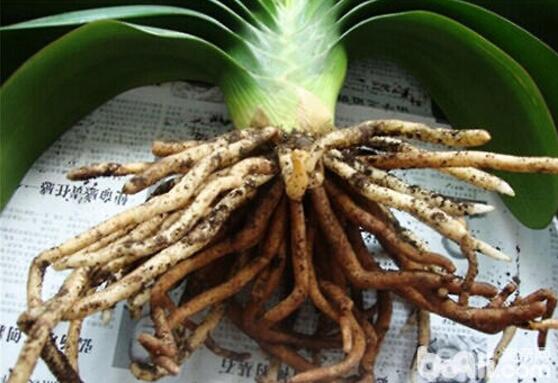
What to do about root rot in Clivia? Improper fertilizing is the main cause, 5 tricks to easily solve it
Clivia (Clivia miniata) is certainly familiar to flower lovers. It is an excellent indoor plant, not only extremely ornamental but also remarkably effective at beautifying the environment and for medicinal use. The benefits of Clivia have attracted many people to grow it, but during the growing process, improper care often leads to root rot. So what should you do about Clivia root rot?
-

What to do when Chinese trumpet creeper leaves turn yellow? Too much water and too little fertilizer are the main causes, 4 points to easily solve it
As an excellent choice for home cultivation, Chinese trumpet creeper has verdant leaves, and after blooming, its flowers are trumpet-shaped, making it a favorite of many flower enthusiasts. However, during cultivation, Chinese trumpet creeper encounters various problems, such as yellowing leaves. So what should be done when Chinese trumpet creeper leaves turn yellow? Actually, at this time you shouldn't be impatient, but should calmly find the cause.
-

How to grow gardenias? Master the care methods to solve yellow leaves and buds that won't open
Gardenias are deeply loved by the public, and how to grow gardenias is also a question everyone cares about very much. Below we introduce the home growing methods for gardenias. Gardenia is also known as zhizi, and in the Ningbo area it is called yulanhua. It originated in our country. Rubiaceae family, an evergreen shrub. Its branches and leaves are lush, and its tree shape is beautiful. At the turn of spring and summer
-
Reasons why pigs eat but do not put on fat, and how to solve it
During the growth process of pig farming, some pigs eat but do not put on fat. What is the reason? The causes and treatment methods are described below: Look for causes. First, check for congenital causes, such as inbreeding or breeding a young sow too early. Second, check for acquired causes: insufficient mother's milk, unreasonable grouping after weaning, with the big bullying the small; chronic diseases, such as anemia, white scour of piglets, and internal and external parasitic diseases; surgical diseases, such as intestinal adhesions after castration; unreasonable feed formulation, such as protein deficiency and trace element deficiency, etc., all of which can cause slow or stopped growth in pigs.
-
How to reduce contamination in edible mushroom inoculation? Five practical methods to help you solve it
Autumn and winter are the golden seasons for producing edible mushrooms, but every year, inoculation contamination causes economic losses of around 20% for mushroom growers. Using the following 5 methods can reduce the inoculation contamination rate. 1. Bottled fermented material: Fill fermented material 1 to 2 cm deep above the culture medium at 4 cm from the bottle mouth, then sterilize. Its advantages are that contaminating bacteria are less likely to infect the culture medium, and the spawn age is consistent. 2. Wheat grain germination method: Let wheat grains germinate before bottling and sterilizing. That is, let the wheat grains used for spawn germinate all at once, with sprouts 1 to 2 times the length of the wheat grains, then fully sun-dry and store. One day before making the spawn, soak the wheat grains for 12 hours and directly bottle and sterilize. Its advantages are that the process of boiling the wheat grains is omitted, mycelium grows quickly, and there are fewer contaminating bacteria. The contamination rate is 2% to 3%.
-
The plane tree fluff problem is expected to be solved: Huazhong Agricultural University has cultivated hairless plane trees
It was learned from Huazhong Agricultural University that the university has cultivated hairless plane trees, which is expected to solve the problem of plane tree fluff pollution. The scientific name of the French plane tree is "Platanus", and it has advantages such as fast growth and a large, dense canopy, and is known as one of the "world's five major street trees." But from April to June each year, the seed balls of Platanus scatter and the pappus flies about, not only polluting the environment but also affecting people's health. For this flying fluff pollution, chemical pruning is mostly used in China, that is, spraying chemical agents to promote early shedding of the seed balls. But this method is labor-intensive and time-consuming, and is not easy to promote on a large scale.
-
How to solve the weeding problem in dry Pinellia ternata? An analysis of practical methods
Dry Pinellia ternata is a dicotyledonous plant. In the cultivation process of this medicinal material, the weeding problem is rather tricky, and there is currently no clear and effective method; it is still mainly manual weeding, and no herbicide weeding trials have been conducted. It is said that an expert specializing in Pinellia once used glufosinate after sowing dry Pinellia, with slight effect, but we do not know the specific dilution concentration. You might try using glufosinate starting from a low concentration (100-fold solution), testing in a small area with a gradient of ratios, and after observation, once it is confirmed that the herbicide has a clear killing effect on other weeds and
-
How to Clear Wild Trash Fish from Fish Ponds? Four Methods to Solve It Easily
When filling, changing water, and feeding aquatic plants in intensive ponds, wild trash fish or their eggs such as sharpbelly, topmouth gudgeon, crucian carp, loach, and grass shrimp inevitably get mixed in. These wild trash fish not only have strong food-grabbing ability, a large feeding volume, and low economic value, but also reproduce quickly. In addition, carnivorous predatory fish such as snakehead and catfish can also swallow cultured fry. Therefore, various measures must be taken in aquaculture management to remove wild trash fish. 1. Kill the wild trash fish in the pond in advance. Before stocking fry, drain the pond water, let the pond bottom freeze and sun-dry for a period of time, then add 20-3
-
What to Do About Embryo Resorption in Sows? Five Prevention and Treatment Methods to Help You Solve It
In pig farming, a low farrowing rate in sows is a common problem. Besides a low fertilization rate, early embryonic death during development followed by resorption by the sow (commonly known as embryo resorption) is also an important cause. This difficult problem can be solved through the following methods. 1. Strengthen the feeding and management of open sows: 3 to 14 days before mating, increase protein feed and energy feed, and add minerals and vitamins at the same time, so that they enter the optimal mating state more quickly; for open sows in poorer body condition, a longer period before mating
-
Main Causes of Non-Disease Death in Koi and How to Solve Them
I. Water Quality Problems Currently, household koi keeping mainly uses tap water. In some areas, the source water for tap water is of poor quality, and water plants use large amounts of disinfectants and cleaning agents during treatment. After a water change, the fish cannot adapt and become poisoned, which is why water treatment steps such as sunning and aerating the water before a change are necessary. Chlorine in the water is the main cause of fish poisoning. During water changes, a gradual step-by-step method should be used as much as possible, completing the change in several stages, and an appropriate amount of sodium thiosulfate should be added to remove residual chlorine from the water.
条件筛选