How should lactating does be managed to increase milk production?
The lactation period of a doe lasts from kindling to weaning of the kits, 30 to 35 days. The feeding and management principles for this period are: strengthen nutrition to increase milk production; prevent disease, check promptly and treat promptly. Therefore, the following aspects should be done well:
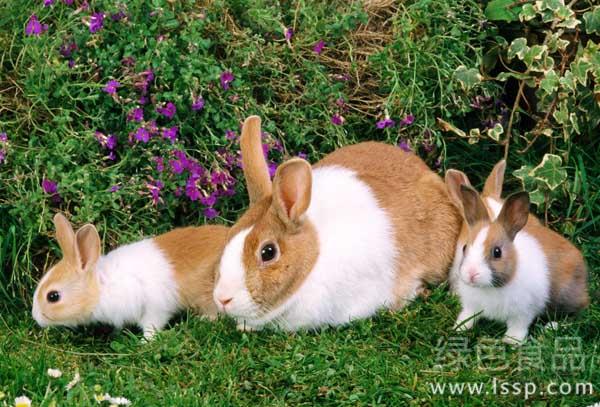
Doe
1. Prevent disease
To prevent mastitis in does, 2 to 3 days before kindling appropriately reduce the amount of concentrate feed and increase the amount of green, succulent feed; at the same time, feed each doe 1 tablet of sulfadiazine or 1 tablet of sinomin daily. After kindling, inject penicillin intramuscularly at 400,000 to 800,000 international units.
2. Nutrition must be comprehensive
During lactation, a doe secretes 60 to 150 milliliters of milk per day; a high-yielding doe can secrete 150 to 250 milliliters per day, with a maximum of 300 milliliters. Therefore, the nutritional level of the doe during lactation is directly related to how much milk she produces. During this period, the crude protein content of the doe's feed should remain at 17% to 18%, and feeding an appropriate amount of green, succulent feed as well as vitamin-containing foods such as barley malt and carrots can significantly increase the doe's milk production. At the same time, the doe must be supplied with enough clean drinking water.
3. Adjust the feed amount in good time
For 1 to 2 days after kindling, the doe eats little. This is because after kindling the doe eats the afterbirth, which is difficult to digest, while giving birth. Generally, appetite recovers only after 3 days, so before 3 days have passed, feed more succulent feed, and afterward gradually increase the feed amount. When the doe is 10 to 15 days past kindling, milk production reaches its peak; at this time her intake must be satisfied, with sufficient feed and timely drinking water. About 5 days before the kits are weaned, appropriately reduce the feed amount, otherwise mastitis easily occurs. In addition, the doe's daily ration level should be adjusted according to the condition of the kits' feces and urine. For kits whose eyes have not yet opened, most of the milk they consume is absorbed, and there is very little feces and urine, which indicates that the doe's feed amount is normal. If there is a lot of urine in the kindling box, it indicates that too much succulent feed is being fed; if the kits have a lot of feces and little urine, it indicates that the doe is being fed too much concentrate and too little green, succulent feed.
Rabbit
4. Check the nursing situation promptly
If the doe lactates abundantly, after the kits are full their abdomens are round and distended, their skin color is rosy and glossy, and they sleep quietly without moving; on the contrary, the kits' skin color is dull, both ears are pale, the abdomen is narrow, the skin is wrinkled, and they crawl and scurry about everywhere, sometimes making “zhi zhi” cries, with uneven development and large differences among individuals, and sometimes diarrhea or constipation occurs. If the doe has milk but does not nurse, artificial supplementary feeding is needed; generally after 3 to 4 days of training, the doe will nurse automatically. If the doe has no milk or insufficient milk, immediately feed her soybean milk, rice soup or mineral water, and add green, succulent feed such as carrots, bitter amaranth, cauliflower leaves, dandelion, etc. At the same time, an injection to promote lactation or an oral lactation-promoting tablet can also be given. If hard lumps are found in the doe's mammary glands, or redness, swelling and scorched spots appear on the nipples, treat promptly, so that the kits do not drink milk from an inflamed mammary gland and develop pyosepticemia or kit yellow urine disease, etc.
5. Nurse at fixed times
During lactation, the doe should develop the habit of nursing at fixed times; nursing at fixed times can reduce the occurrence of mastitis in does and promote the normal growth and development of the kits. Generally, a doe nurses 2 times a day, that is, once in the morning and once in the evening; a few does nurse once a day, and nurse while kindling at the time of kindling; after the kits' eyes open, the doe's nursing amount and number of nursing sessions increase, reaching 3 times, until the kits are weaned.