-

Edible Mushroom Disease Prevention and Control Methods and Simplified Innovative Seed Production Method
Simplified Innovative Method for Edible Mushroom Spawn Production
-
Do not use cottonseed hulls with a high content of cottonseed kernels directly for cultivating oyster mushrooms
Cottonseed hulls consist of the hulls left after the kernels are removed from cottonseed, the short cotton lint attached to the hulls, and a small amount of broken cottonseed kernels. Cottonseed hulls are rich in nitrogen, phosphorus, potassium, cellulose and lignin, with a carbon-to-nitrogen ratio of 79-85:1, are slightly alkaline, loose outside and dense inside, have good air permeability and strong water retention, and are a top-grade material for edible mushroom cultivation. However, cottonseed hulls contain toxic substances, and after sterilization under high pressure or normal pressure they release aldehydes, ketones and acids, and these toxic substances inhibit mycelial growth, delay pinning, and cause undesirable outcomes such as small mushrooms and poor mushroom quality.
-
Detailed Explanation of Arrowhead Seed Retention Methods and Technical Key Points
Before collecting seeds, a seed retention field must be selected. Choose a high-yielding field plot with pure varieties, robust growth, light pests and diseases, and few bolting and flowering plants for seed retention, and harvest when the aboveground parts have completely withered. After harvesting, select corms that conform to the characteristics of this variety, are relatively large, heavy, and have relatively curved terminal buds as seeds. Curved terminal buds are conducive to nutrient accumulation and are not easy to sprout. The selected seed corms should have their terminal buds broken off, with a small part of the upper corm attached. That is, pour the arrowhead terminal buds into a 600-fold solution of 50% carbendazim and soak for 20-25 minutes, then remove
-
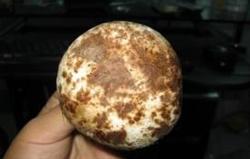
In the process of oyster mushroom cultivation, the seed production stage must be strictly controlled.
Rust-colored or dark brown spots appearing on the caps and stipes of oyster mushrooms are called oyster mushroom rust spot disease. This disease is a bacterial disease that readily occurs during the fruiting body growth stage of oyster mushrooms. The pathogen causing this disease is a species of Pseudomonas bacterium that is extremely widely distributed in nature. In the early stage of the disease, the spots are only the size of a needle tip, and the color...
-
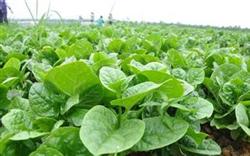
Methods for Raising Seedlings and Transplanting Ceylon Spinach (Malabar Spinach) and Key Technical Points
Prepare the seedbed well, sow dry seeds, and seedlings emerge in 3 to 5 days at a suitable temperature of around 28°C; if the soil temperature is on the low side, the seeds should be pre-germinated before sowing. During the seedling stage, keep the temperature appropriately low, and transplant when the plants have 4 to 5 true leaves. For harvesting tender shoots, use a row spacing of 20 to 25 cm and a plant spacing of 15 to 20 cm; for growing on trellises to harvest tender leaves, use a row spacing of 60 cm and a plant spacing of 25 to 35 cm, keeping...
条件筛选