-
How to Grow and Transplant Strawberries at Home
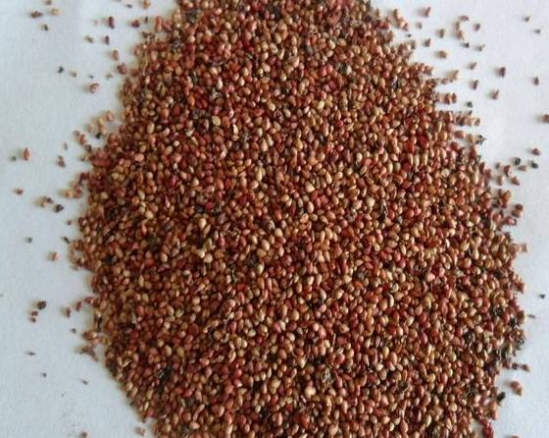
Strawberries, which are also a type of fruit, are something many people know about, and lots of people love them. So how do you grow strawberries at home? How do you transplant them: How to grow strawberries at home: Growing process, Step 1: Save the seeds. When eating strawberries, you can pick the strawberry seeds off with a toothpick.
-
What to do if potted strawberries do not bloom? How many to plant per pot
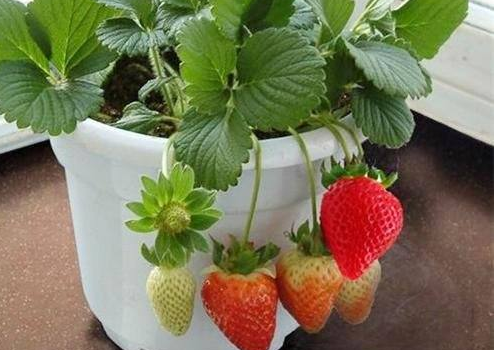
Potted strawberries, this is also one of the types of strawberries, and it is something that a huge number of people know about, and it is super good-looking. So what to do if potted strawberries do not bloom? How many to plant per pot: What to do if potted strawberries do not bloom: If strawberries do not bloom during our care process
-

Key Technical Points for High-Efficiency Cultivation of Straw Mushrooms in Winter
Straw mushrooms (Volvariella volvacea) are a high-temperature, high-humidity type of fungus, suited to growing in an environment of constant temperature and stable humidity. The suitable growing temperature for straw mushrooms is 23-25°C, and the relative air humidity is 85%-95%. Therefore, to move the high-temperature straw mushroom to cultivation in the lower temperatures of winter, it must be grown in greenhouses with good insulation capacity, which increases cost inputs such as heating. Moreover, straw mushrooms produced in winter sell for 2 times the price of those from conventional summer cultivation, so appropriate adjustments should be made in aspects such as the culture material formula and cultivation management, in order to
-
What to Do About Dead Straw Mushrooms? A Detailed Guide to New Prevention and Control Techniques
I. Causes of Dead Straw Mushrooms 1. Poor coordination between ventilation and moisture retention in the mushroom house. Straw mushrooms are aerobic fungi and need plenty of water; too much ventilation easily leads to water loss and death. Insufficient ventilation easily causes excessive carbon dioxide and death from oxygen deprivation. 2. Sudden temperature changes in the mushroom house. In southern China, most straw mushroom cultivation uses foam mushroom houses, which play an important role in maintaining constant temperature and humidity. However, if doors and windows are not closed in time when a typhoon strikes, or heating is not applied in time when freezing damage occurs, or ventilation and cooling are not carried out early enough during sustained high temperatures, or too much well water is sprayed on the floor,
-
Detailed Explanation of Key Points on Straw Mushroom Harvesting and Processing Techniques
After piling the straw and sowing, mushrooms begin to appear in 10-15 days (as quickly as about one week). The appropriate harvest time for commercial straw mushrooms is when the mushroom buds are about to rupture and the caps inside the volva have not yet opened. The specifications for canning are a diameter of 2 cm or more, a neat mushroom shape, an unruptured outer veil, and an unelongated enclosed stipe. The requirements for making dried mushrooms are a diameter of 4 cm or more and an unruptured outer veil. Those with a ruptured outer veil are slightly lower in quality, and those with opened caps are even worse; the latter can only be sold as substandard fresh mushrooms. For dried mushrooms, the mushroom buds should be cut longitudinally into two connected halves, arranged on a bamboo sieve or wire mesh sieve, placed on the racks of a specially made drying room, and dried over a slow fire. The initial drying temperature is 35-40°C, and as the moisture decreases, the temperature is gradually raised to 60-65°C, until the moisture content of the straw mushrooms reaches 12-13%.
-
Analysis of the Reasons for the High Economic Returns of Winter Cultivation of Straw Mushrooms
Straw mushrooms (Volvariella volvacea) are a type of fungus that thrives in high temperature and high humidity, suited to growing in an environment of constant temperature and stable moisture. Therefore, moving the heat-loving straw mushroom to winter cultivation requires growing it in greenhouses with good insulation capacity, which increases cost inputs such as heating. However, straw mushrooms produced in winter sell for 2 times the price of those conventionally cultivated in summer, so appropriate adjustments should be made to the substrate formula and cultivation management, among other aspects, in order to increase the input-output ratio and improve economic returns. The main techniques for winter cultivation of straw mushrooms are introduced as follows: 1. Select a suitable substrate formula, build a pile and ferment the straw mushrooms.
-
Detailed Explanation of Straw Mushroom Grading Standards and Processing Techniques
I. Straw Mushroom Grading Standards: 1. Fresh mushroom grading: Grade 1: mushroom cap circumference 8-11 cm, solid. Grade 2: mushroom cap circumference 6-8 cm, solid. Grade 3: mushroom cap circumference 6-8 cm, wrapper slightly split. Broken-cap: cap cracking not exceeding 0.5 cm. Substandard: mushroom cap circumference 5-6 cm, with some broken caps. 2. Dried mushroom grading: base trimmed, free of sand and impurities, cap surface mouse-gray or grayish-white, flesh white. No mushrooms with opened veil or expanded cap, moisture content 12%, fragrant, free of insect damage and mold, free of scorched yellow or blackened areas.
-
How to Grow Straw Mushrooms? A Detailed Guide to Two Cultivation Techniques
The straw mushroom production season has now arrived. What are the detailed cultivation techniques for straw mushrooms? Straw mushroom cultivation includes waste cotton residue cultivation and rice straw cultivation, which are introduced separately below: Waste cotton residue cultivation 1. Soaking and composting fermentation: Soak the waste cotton residue in lime water, adding about 5 kg of lime per 100 kg of waste cotton residue. After thorough soaking, scoop it out and pile it up, cover with plastic film and ferment for about 2 days, controlling the moisture content at about 70% (when squeezing the material by hand, a small amount of water seeping through the fingers is ideal), with a pH value of about 8.5. 2. Secondary fermentation: Move the material into a
-
Detailed Explanation of Key Points of New Open-Air Cultivation Techniques for Straw Mushrooms
For cultivating straw mushrooms, mainly rice straw is used. Materials with higher plant cellulose content such as bagasse and corn stalks can also be used. Because straw mushrooms have many sources of cultivation material, the cost is relatively low, and the cultivation technique is relatively simple, with very high economic returns. For every 100 kg of rice straw, from inoculation to fruiting takes only 12 days, and the entire production cycle is no more than one month, yielding 20-30 kg of fresh mushrooms. In this way, every 100 kg of cultivation material can create an output value of 60-120 yuan. The straw mushroom is a fungus that likes high temperature and high humidity. The temperature required for mycelial growth is 20
-
Detailed Explanation of Key Techniques for Field Cultivation of Straw Mushrooms
Field cultivation of straw mushrooms requires simple equipment, is easy to operate, and offers high economic returns; it can also improve soil fertility and increase crop yields. The specific techniques are: 1. Site selection should choose a location with relatively high terrain, convenient water sources, and soil fertility above medium level. 2. Crop planting method: Straw mushrooms grown in open fields are generally intercropped between rows of tall crops such as corn, sunflowers, and sorghum, so as to create a shaded microclimate. 3. Cultivation substrate formulas: (1) 70% chopped rice straw, 30% fresh horse manure; (2) 58% crushed corn cobs, 40% sorghum husks, urea, and superphosphate, 1% each.
条件筛选