-

8 common appearance problems of bagged Emerald pear and their solutions
Emerald is an excellent new pear variety bred by the Zhengzhou Fruit Research Institute, developed by crossing New Century and Zaosu. Since 2000, after 6 years of bagged cultivation through top-grafting to change the canopy in our city, we have found that this variety has a regular fruit shape, a smooth and glossy fruit surface, creamy white flesh, a crisp and tender texture with abundant juice, and few stone cells, making it an early-maturing pear variety of excellent quality. However, in production we have found that bagged pears often show abnormal phenomena such as black wrinkling, fruit russeting, tiger-skin markings, floral green coloration on the fruit surface, black spots, cracking, and deformities that affect the external quality of the fruit. For this reason we conducted an investigation and analysis and proposed solutions.
-
Analysis of the Current Status and Existing Problems of Upland Rice Production
Upland rice, also known as dryland rice, is a type of cultivated rice with strong drought resistance, tolerance to poor soil, and suitability for dryland direct seeding and dryland management. It can be planted in any soil suitable for growing major dryland grain crops such as wheat and corn. It does not require water layer management throughout the entire growth period, and its irrigation volume is only 1/4 to 1/10 that of paddy rice. Upland rice is more drought-tolerant and barren-tolerant than paddy rice, and has the water-saving characteristics of low input and high output. I. Overview of World Upland Rice Production Currently, the world's upland rice planting area is 0.18 billion hectares. In West Africa, upland rice accounts for more than 75% of the rice growing area, and in
-
Technical Problems and Solutions for the "Two No" Cotton Cultivation Technique
The "Two No" cotton cultivation technique refers to cotton seedling raising in soilless substrate and transplanting of bare-root seedlings without carrier. From 2004 to 2005, after demonstrations at more than 80 county sites across the country, some technical problems were found, and the following solutions are proposed: 1. Excessive seedbed density Main causes: First, rows were not marked out at 10 cm row spacing and 3 cm plant spacing; second, the sowing rate was too high with too many seeds; third, after emergence, seedlings were not thinned in time, resulting in leggy or spindly seedlings. Solutions: First, mark out rows at 10 cm row spacing and 3 cm plant spacing; second, sow according to plant spacing,
-
The plane tree fluff problem is expected to be solved: Huazhong Agricultural University has cultivated hairless plane trees
It was learned from Huazhong Agricultural University that the university has cultivated hairless plane trees, which is expected to solve the problem of plane tree fluff pollution. The scientific name of the French plane tree is "Platanus", and it has advantages such as fast growth and a large, dense canopy, and is known as one of the "world's five major street trees." But from April to June each year, the seed balls of Platanus scatter and the pappus flies about, not only polluting the environment but also affecting people's health. For this flying fluff pollution, chemical pruning is mostly used in China, that is, spraying chemical agents to promote early shedding of the seed balls. But this method is labor-intensive and time-consuming, and is not easy to promote on a large scale.
-
Detailed Explanation of Common Problems in Phalaenopsis Cultivation
1. Key points for post-blooming care: After a Phalaenopsis blooms, it can still continue to bloom. Once the flowers fade, promptly cut off the flower stalk growing from the base of the plant to prevent nutrient consumption. 2. The flowers are pale and not vivid because the plant has been kept in a dark indoor place for a long time, resulting in poor ventilation and insufficient light. The frequency of ventilation must be increased, and sufficient light must be provided. 3. Drooping and soft leaves are mainly caused by insufficient light; the duration and intensity of light need to be gradually increased, and the leaf surface should be kept clean. Usually, when cleaning the leaf surface, do not wash or wipe it with water
-
Common Problems and Countermeasures in Wheat Aphid Control
Problem 1: Controlling too late. Some farmers do not control according to the control threshold for wheat aphids, but instead control after the wheat aphids have covered the wheat ears. This not only harms the wheat, but also, because control is too late, affects the control effect. Countermeasure: The control threshold for wheat aphids is 500 aphids per 100 ears. Fields that reach the control threshold must be treated with pesticides immediately. Problem 2: Not updating the pesticide used. Not updating the pesticide used will cause wheat aphids to develop resistance to the pesticide used, and the control effect will be extremely poor. Countermeasure: In the early stage of aphid occurrence, per mu
-
Main Problems and Cause Analysis in Pleurotus pulmonarius Cultivation
At present, the cultivation area of Pleurotus pulmonarius in our city has exceeded 50 million bags, making it one of the main edible mushroom varieties cultivated in our city, with good cultivation prospects and benefits. Pleurotus pulmonarius cultivation can be carried out year-round through low-temperature treatment in cold storage. However, due to improper season, variety, culture medium, temperature treatment and water control, phenomena such as failure to fruit or death of mushroom buds often occur. Through years of cultivation practice, we have explored and summarized the above problems for the reference of peers. 1 Variety selection Currently, the main variety cultivated in our city is the Pleurotus pulmonarius series introduced from Taiwan, China by Luoyuan
-

What are the common problems in the process of king oyster mushroom cultivation?
Common problems in king oyster mushroom cultivation
-
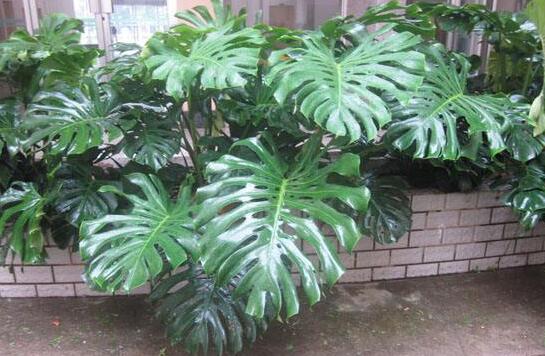
How do you get a Monstera deliciosa to develop leaf splits? Simply water it regularly, fertilize more, and increase light, and the problem is solved.
The leaves of the Monstera deliciosa are its most distinctive feature and one of the main reasons people love it. What makes the leaves so unusual is that they naturally develop splits once the plant reaches a certain stage of growth. However, some growers find that their Monstera deliciosa shows no sign of splitting for a long time.
-

条件筛选