-

Occurrence Patterns and Control Techniques of Jujube Iron-Skin Disease
Jujube iron-skin disease, also known as fruit-shrinking disease and black rot, commonly called wu zhuo, wu liao tou, dry waist, black waist, iron scorch, fire head, etc., is a fruit disease that seriously harms jujube trees. Since the early 1980s, the damage from this disease has become increasingly severe. It begins around the coloring stage, develops rapidly and in concentrated fashion, and often breaks out in epidemics. It occurs in many jujube-producing areas including Hebei, Henan, Shandong, Shanxi, Inner Mongolia, Guangxi and Sichuan. In normal years the disease causes yield losses of 20%-50%, and in severe years losses reach 70%-80%, or even
-
Occurrence Patterns and Control Methods of the Pear Buprestid Beetle
The pear buprestid beetle begins eclosing in late April, and in early to mid-May the adults chew an oval-round hole to emerge. After emerging, the adults feed on leaves during the day, rest quietly on the leaves in the morning and evening, and when startled have the habit of dropping to the ground and feigning death. About 10 days after emergence and activity, the adults begin to lay eggs; before laying, they crawl along the trunk and insert their ovipositors into rough, raised cracks in the bark to lay eggs, mostly at the fork junctions of branches and trunks that are 2 years old or older, laying 2-3 eggs per site, with each female able to lay 20-40 eggs. Mid to late May is the peak egg-laying period, and early June is the peak hatching period. After hatching, the larvae first bore into the cortex
-
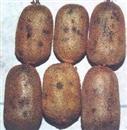
Occurrence Patterns and Control Methods of Kiwifruit Gray Mold
Kiwifruit gray mold mainly occurs during the flowering stage, young fruit stage and storage period of kiwifruit. In severe years, the incidence rate in orchards and during storage can reach more than 50%. Kiwifruit gray mold has become one of the main diseases affecting the healthy development of the kiwifruit industry. 1. Symptoms When young fruit (late May to early June) is affected, residual stamens and petals are densely covered with gray spores. At the initial stage, the fuzz on young fruit turns brown, the skin is infected, and in severe cases it can cause fruit drop. Contaminated stamens and petals attach to leaves and form concentric ring lesions centered on them; the lesions expand and leaves drop. If rain occurs, the disease develops more severely. After fruit is affected, gray-brown mycelium and spores form on the surface, followed by black sclerotia. During storage, fruit is easily infected by diseased fruit.
-
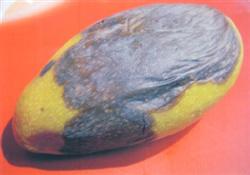
Occurrence Patterns and Control Methods of Mango Anthracnose
1. Damage symptoms: It mainly damages mango flowers, fruit, and tender shoots. After tender leaves are infected, many small round brown spots appear, surrounded by a yellow halo, and they gradually expand into round, polygonal, or irregular brown lesions, which later rupture and perforate. Wounds on leaves and young fruit caused by gall midges, leafhoppers, and other pests are also easily infected by this disease. Severely infected...
条件筛选