-
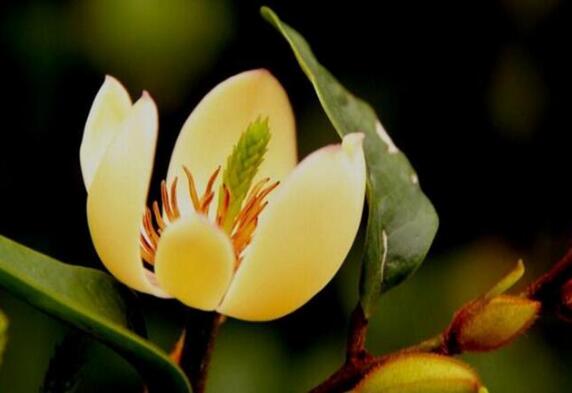
Michelia figo blooms from March to May; how should you care for it to get more flowers?
Most people have heard of Michelia figo (banana shrub). Its flowers are lovely in shape, fresh in color and captivating in fragrance, making it a highly ornamental plant, so everyone who grows it looks forward to it blooming. So when does Michelia figo bloom? To make Michelia figo more ornamental, the more flowers it produces the better.
-

What to do when a potted orchid won't bloom? It may be that the orchid seedling is not yet mature
I. What to do when an orchid won't bloom. The orchid is a beautiful yet understated flower. Earlier we discussed what to do when orchids get pests, and now let's look at what to do when an orchid won't bloom. Generally speaking, an orchid will not fail to bloom. There are many reasons why an orchid won't bloom; it may be that the orchid seedling has not reached blooming age
-
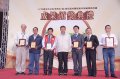
Traditional Market Guidance and Evaluation Awards Ceremony Attended by Taipei Mayor Ko Wen-je
Taipei Mayor Ko Wen-je yesterday (the 26th) attended the 107th year Taipei City Public Retail Markets (and Vendors) and Temporary Street Vendor Concentration Areas Guidance and Evaluation Results Awards Ceremony. Mayor Ko Wen-je pointed out that a very important goal of his term is to bring Taipei City's markets...
-
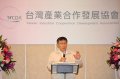
Taiwan Industrial Cooperation and Development Association Established, Taipei Mayor Ko Wen-je Attends
Taipei Mayor Ko Wen-je attended the inaugural meeting of the Taiwan Industrial Cooperation and Development Association at noon on the 7th. Mayor Ko Wen-je expressed his hope that the association could become an integrated platform for industry, government, and academia, build consensus, and promote industrial development. He also once again emphasized that innovation and entrepreneurship are Taiwan...
-
Introduction to the main characteristics of the peach variety Mayfire
Bred by the USDA Horticultural Experiment Station in California from natural seedlings of Armking embryos through embryo culture. Introduced in 1989 to the Zhengzhou Fruit Research Institute of the Chinese Academy of Agricultural Sciences. The fruit is oval, with two symmetrical halves and a slightly protruding tip; average single fruit weight 75 g, maximum fruit weight 110 g; the skin's ground color is orange-yellow, fully covered with red, glossy, attractive in appearance, and the skin peels easily; the flesh is firm-melting, yellow, without red pigment, moderately juicy, aromatic, with a flavor more sour than sweet; soluble solids 8.8%. Clingstone. The tree is relatively vigorous, with a
-
Shiitake mushrooms may be used to produce fuel, with promising prospects
People are all too familiar with the shiitake mushroom as a delicious food, but a latest study in the United States may give this edible fungus a new mission -- one day in the future, shiitake mushrooms may gradually leave people's dining tables and kitchens and find their way into people's car fuel tanks. According to reports, the shiitake mushroom, this delicious fungus, usually grows on felled trees in forests. It breaks down the complex organic matter in wood into sugars and uses them as nutrients to sustain its own growth. At present, the Agricultural Research Service of the United States Department of Agriculture
-
Large-scale leaf-rolling of the central leaves of rice may be related to excessive application of quinclorac
For some time recently, hundreds of readers across our province have called to report large-scale leaf-rolling of the central leaves of rice seedlings, which is even more common in direct-seeded rice production. Many readers brought in diseased plants. The root systems of the diseased plants are generally fairly normal, and there are no obvious disease spots or other symptoms on the leaves. After examining the submitted diseased plants, relevant experts from the Institute of Plant Protection of the Provincial Academy of Agricultural Sciences and other units preliminarily diagnosed that the leaf-rolling of the central leaves of rice is not caused by viruses or other pathogenic microorganisms, but may be phytotoxicity caused by herbicides such as 2,4-D and quinclorac, or may be caused by physiological
-
Feeding fish rare earth works well; fish farmers may want to give it a try
Rare earth refers to the collective term for the 17 metallic elements of the lanthanide series in the periodic table, including lanthanum, praseodymium, neodymium, cerium, samarium, and others. Among them, cerium accounts for 48%, lanthanum 25%, neodymium 16%, praseodymium 5%, samarium 2%, and the other 12 elements 4%. In recent years, rare earth has become an important resource for the national economy and national defense construction. It can not only be widely used as an industrial vitamin in metallurgy, machinery, petroleum, chemicals, light industry, electronics and other industries, but can also be used as a micro-fertilizer in agricultural production. In fishery production, feeding rare earth to fish also has very good results. According to experiments,
-
Wild mushrooms may be developed into anti-cancer drugs
Seemingly ordinary macrofungi, that is, wild mushrooms commonly parasitic on tree trunks, may actually be developed into antibacterial and even anti-cancer drugs. A research team composed of four lecturers and their students from the School of Chemical and Life Sciences at Nanyang Polytechnic in Singapore has, over the past two years, classified and studied more than 400 species of local wild mushrooms, and found that two of them contain anti-cancer compounds and 30 contain antibacterial compounds. At present, they have successfully identified the chemical structure of one wild mushroom with anti-cancer properties, and confirmed
-
What variety is Mayfire nectarine? What are its characteristics?
In 1980, it was developed by the California Horticultural Experiment Station of the United States Department of Agriculture through embryo culture from naturally pollinated young embryos of Armking. In 1989, it was introduced to the Zhengzhou Fruit Research Institute of the Chinese Academy of Agricultural Sciences. The fruit is oval, with symmetrical halves and a slightly protruding apex; the average single fruit weight is 75 g, and the largest fruit weighs 110 g; the ground color of the skin is orange-yellow, fully covered with red, glossy, and attractive in appearance, and the skin peels easily; the flesh is firm-melting, yellow, without red pigment, medium-much juice, aromatic, with a flavor more sour than sweet;
条件筛选