-

Signs of Sudden Household Plant Withering and Dormancy States
As June arrives and summer takes over, the weather is getting hotter and hotter, and those plants that naturally prefer cool conditions now all look like children who have done something wrong, completely droopy and wilted. Some varieties cannot tolerate the heat and even enter full dormancy, looking as if they are dead. However, novice flower enthusiasts should absolutely not throw them away at this sight,
-

Fragrant flowers with long bloom periods that are easy to grow and smell even better than perfume
Some flowers are practically walking scent machines, smelling even better than designer perfumes. These strongly fragrant flowers are not only richly scented and long-blooming, but also very easy to care for, making them suitable for beginners and busy plant lovers. Jasmine: When it comes to the king of fragrance, jasmine must be the first to be nominated! Its scent is fresh and elegant, and smelling it is especially
-

Is a tall or short Phalaenopsis plant better, and is there a standard size?
When caring for or buying Phalaenopsis orchids, many people agonize over the question of tall versus short plant types, and are also curious whether there is a standard height. Below, from the aspects of ornamental value and care difficulty, we analyze the secrets of Phalaenopsis plant types for you. Tall-type Phalaenopsis orchids usually have upright flower stems and a larger number of flowers, making them more spectacular in presence. They are suitable for placement in
-

Too many long old roots on your Phalaenopsis orchid, and the roots are aging and rotting - what should you do?
Anyone who grows Phalaenopsis orchids has surely run into this: the old roots in the pot are numerous and long, and some have even turned black and rotted - just looking at them is upsetting! Phalaenopsis roots are not just ordinary decoration; they not only absorb water and nutrients but can also carry out photosynthesis, making them truly multi-functional players! If you find the old roots packed densely
-

What kind of bark is best for Phalaenopsis potting mix, and does it need to be fermented?
When growing Phalaenopsis, choosing the potting mix is crucial, and bark is one of the commonly used ingredients. But which bark is best? Does it need to be fermented? Many flower growers have this question. When growing Phalaenopsis, bark must have good air permeability and water retention! The most commonly used is pine bark, especially after it has been decomposed, it can be called a golden potting mix! Pine bark is
-

The Harm and Lethal Risks of Overusing Bud Inducers on Phalaenopsis Orchids
Many flower enthusiasts, hoping to make their Phalaenopsis orchids quickly grow more side shoots and produce more flowers, choose to use bud inducers. But overusing bud inducers not only fails to achieve the desired effect, it can also cause fatal harm to the orchid. Bud inducers are mainly plant hormones, such as cytokinins and gibberellins. Used in moderation, they can stimulate the plant
-

The Effects of Long-Term Drought on Phalaenopsis and How to Care for Them When You Are Away
Anyone who grows Phalaenopsis (moth orchids) at home has surely felt this anxiety - you come back from a long trip and find the leaves wilted like deflated balloons, the flowers scattered and fallen, and the whole plant on the verge of withering! Phalaenopsis is sensitive to water needs. If drought lasts a long time, the plant will face many crises. Phalaenopsis may look delicate, but its roots are actually very toler
-

How to make Phalaenopsis (moth orchid) grow roots quickly? Practical rooting tips and methods
Want your Phalaenopsis to have strong roots and new roots sprouting fast! From root-promoting methods to care and management, this step-by-step guide shows you how to grow roots quickly. 1. Root-promoting methods 1. Upside-down method: Place the Phalaenopsis head-down in a container, with the leaves immersed in water, and avoid direct strong light. Change the water every 2-3 days, and use scattered light to promote photosynthesis and stim
-
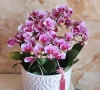
Symptoms of frostbite in Phalaenopsis orchids and how to remedy them
In winter, if you are not careful, the delicate Phalaenopsis orchid can easily get frostbitten, with leaves turning black, turning to mush, or even the whole plant wilting. Do not rush to throw it away. Below, we will share first-aid methods with you, and it may even come back from the dead. 1. Emergency pruning: Frostbitten Phalaenopsis orchid leaves will gradually turn black and turn to mush. These injured parts not only consume nutrients, but also eas
-

Why Tomato Plants Only Grow Tall Without Flowering and How to Fix It
Is your tomato plant shooting up like crazy but showing no flower buds? Don't worry! From light and water to fertilizing, let's help you pinpoint the real problem. 1. Insufficient light. Tomatoes are a classic full-sun crop, needing 6-8 hours of direct sunlight daily to produce enough nutrients to support flower bud differentiation. If they are kept long-term in a dim indoor spot, a corner of the balcony, or a shaded
条件筛选