-

Can Phalaenopsis seedlings take sun and rain? Care essentials
Phalaenopsis orchids are elegant and beautiful, and many flower lovers often struggle with whether their new seedlings can take sun and rain. Only by mastering the right care methods can the seedlings grow strong and healthy. We all know plants need photosynthesis, but Phalaenopsis seedlings are truly "little princesses in a greenhouse" and cannot stand harsh sun! Their original home is the tropical rainforest,
-

Causes of Black-Brown Spots on Phalaenopsis Leaves and How to Treat Them
Nothing worries a plant lover more than suddenly discovering black-brown spots on their Phalaenopsis leaves! What exactly is going on? And once you find black spots, how do you fix it? What could these black-brown spots be? The most common cause is disease, such as soft rot and anthracnose. Soft rot is caused by bacteria; the spots feel soft
-

Are waxy-flowered Phalaenopsis orchids easy to bloom and keep alive?
The waxy-flowered Phalaenopsis variety is unique, and many people wonder: "Are waxy-flowered Phalaenopsis orchids actually easy to bloom? Are they easy to keep alive?" A deeper understanding of their characteristics can provide effective guidance for care. Waxy-flowered Phalaenopsis orchids are real dark horses! Their petals are thick and glossy, as if coated in a layer of wax, and they look premium at a glance. This
-

Can Phalaenopsis orchids be kept outdoors in the yard and rained on heavily?
Growing Phalaenopsis orchids outdoors? It really works! Dodge the high heat in summer, make the most of the light in spring and autumn, and guard against root rot in the rainy season, so even beginners can handle it with ease! Temperature: The most comfortable temperature for Phalaenopsis is 15-30°C. In winter, once it drops below 10°C, you need to build it a warm shelter (just enclose it with clear plastic film, and remember to leave a ventilation opening), otherwise it is prone to cold damage;
-
Which Phalaenopsis varieties are prolific bloomers? Top picks and recommendations
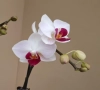
Want your Phalaenopsis to "never stop blooming"? Choosing the right variety is so important! These 6 prolific-blooming champions have long flowering periods, produce masses of flowers, and are low-maintenance, so even beginners can pick them without going wrong. Diaochan has small to medium-sized flowers with a fairy-like elegance, white petals tinged with pink blush like a shy face. It branches extremely well, with a single flower spike producing several clusters of blooms, and a flowering period of a full 3-
-

Why Cherry Tomatoes on the Summer Balcony Fail to Set Fruit and How to Fix It
Cherry tomatoes really are the "beloved favorite" of balcony gardeners and vegetable-growing beginners - they look great, bear fruit quickly, and can be picked and eaten straight away, sweet, tangy, and juicy, so satisfying! But many people run into this: the leaves grow like crazy yet no fruit sets, and when fruit finally does set, it keeps getting smaller and smaller until it shrivels up and drops off... In fact, it is mostly because of falling into plant-care pitfalls. First
-

How to Grow and Care for Potted Grapes on a Balcony
Who wouldn't want to set up a grape trellis on their balcony, pick a cluster of crystal-clear fruit in summer, and bite into that sweet-and-sour taste? In fact, growing grapes in pots isn't that hard. Follow this guide, and even beginners can grow grapes that hang heavy on the vine! Choose the right spot - sunlight must be plentiful: grapes are "sun-loving heavyweights" and need at least 6 hours of direct light per day, and with enough light
-

Which flowering plants easily dry out and drop their leaves in summer and need careful attention?
Once summer arrives, many flower lovers start to worry: why do their plants either turn yellow, dry up, or even outright "kick the bucket"? Actually, some plants are naturally afraid of heat and can't be cared for the old way in summer. Today let's talk about which plants need careful tending in summer, and the "fragile contenders" that easily dry out and drop their leaves. Come and dodge these pitfalls!
-

How can Phalaenopsis orchid spikes grow faster, and are they still useful after blooming?
What do flower growers look forward to most? Of course, it is their own Phalaenopsis orchid sending up a flower spike and rapidly pushing out buds! But if the spike grows slowly, or even refuses to bloom, it can really drive you crazy! How do you make the spike grow fast? The first secret is to feed it well! Phalaenopsis orchids use a huge amount of nutrients to send up a flower spike, and the little bit of nutrients in the bark is not enough. From autumn
-

How do you water and care for a Phalaenopsis orchid grown in bark in summer?
Growing Phalaenopsis orchids in bark is indeed airy and low-maintenance, but once summer arrives, with its high temperatures and muggy weather, a moment of neglect can lead to root rot and yellow leaves. Today let's talk through the complete summer care guide for bark-grown Phalaenopsis orchids - watering, sun protection, and rot prevention, nothing left out! When watering a bark-grown Phalaenopsis orchid in summer, don't stick to the old rule of once a
条件筛选