-

What do Phalaenopsis side shoots and keikis mean, and are the two the same?
In the process of caring for Phalaenopsis, "side shoots" and "keikis" are two terms that are often mentioned. For many novice flower enthusiasts, their meanings may be confusing, and it is also unclear exactly how the two differ. A deeper understanding of Phalaenopsis side shoots and keikis helps us better carry out care and propagation, so that the Phalaenopsis
-
How to Fertilize Phalaenopsis Orchids: A Detailed Guide to Fertilizing Time and Methods
I believe many people who have seen a Phalaenopsis orchid in bloom cannot help but be drawn to it, because its flowers are truly special, like butterflies about to take flight at any moment, both beautiful and ethereal. However, if you want it to stay beautiful, you need to understand how to apply fertilizer at different stages. Phalaenopsis orchids at different stages have different rhythms of
-

Why does my Phalaenopsis orchid have no aerial roots, and can it survive?
As a typical epiphytic orchid, the Phalaenopsis orchid's aerial roots are not only important organs for absorbing water and nutrients and for photosynthesis, but also a direct reflection of whether the plant is healthy. When you find that your Phalaenopsis has no aerial roots, what exactly is going on? Can a Phalaenopsis without aerial roots still survive? If a Phalaenopsis has no aerial roots, it may
-

Which flowers and plants make people dizzy and are unsuitable for growing in the bedroom?
Many people grow some flowers and plants to relieve everyday stress. Although this is a good thing, some flowers are born with latent "toxins". If you are not careful in caring for them and your skin touches them, problems such as itching, redness and swelling, hair loss, and insomnia can easily occur. To protect your own health, when choosing, everyone should
-

Compared with other orchids, is the Phalaenopsis easier to grow, and how do the varieties differ?
As the gentleman among flowers, orchids are deeply loved by people. Among the many orchid varieties, Phalaenopsis has become a market favorite thanks to its butterfly-shaped flowers, while traditional orchid varieties such as Cymbidium goeringii (spring orchid), Cymbidium faberi (Faber's cymbidium), and Cymbidium sinense (Chinese cymbidium) each have their own distinctive features. So which is easier to grow, Phalaenopsis or other orchids? And what differences exist between them? In terms of care
-

Will a Phalaenopsis (moth orchid) die if overwatered, and how much water is appropriate for each watering?
Do you want your own home-grown Phalaenopsis (moth orchid) to bloom all year round? Actually, the simplest thing is just to water it correctly. Some friends find this hard to believe? Aren't you supposed to fertilize and provide light too? Isn't watering something everyone knows how to do? Then why do people keep killing them? Caring for a Phalaenopsis (moth orchid), starting from the moment you buy it from the flower shop owner
-

What green plants are sun-tolerant, drought-tolerant, and can be exposed to full sun outdoors?
In outdoor spaces with blazing sunlight, many plants struggle to withstand the scorching sun, but there are also plenty of green plants that, thanks to their tenacious vitality, still burst with vigorous life in full-sun conditions. These plants not only add greenery to courtyards and balconies, but also easily adapt to extreme light conditions, making them ideal choices for creating an outdoor garden.
-
What is the difference between Phalaenopsis roots and crystal tips?
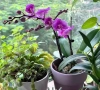
Beginners at growing flowers often can't tell Phalaenopsis roots and crystal tips apart. In fact, as long as you remember these few little tips, you can distinguish them at a glance. 1. Notable differences in position. The roots of Phalaenopsis are distributed quite flexibly on the plant, with no fixed growth points. They sprout from multiple parts such as the base of the stem, extending freely around the plant, searching for suitable
-
Is the Phalaenopsis Little Beauty easy to care for? A detailed look at the pros and cons of this variety
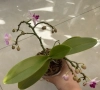
Today I want to recommend a heavenly variety bred by Mr. Wu Fushun of the Yushan Chunlan Garden in Taiwan, China - the Phalaenopsis Little Beauty! It is a tiny, super delicate plant, and a single one placed on an office desk or coffee table instantly fills the space with atmosphere. Although the Phalaenopsis Little Beauty is small in size, its blooming period is super long! Under normal care, the blooming period of the Phalaenopsis Little Beauty can
-
Plants, flowers and trees suitable for growing on a rooftop in full sun: what plants are suitable for a rooftop and tolerate sun
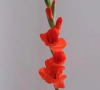
Are you still worried about what plants to grow on a rooftop in full sun? These 6 flowers are a no-brainer! The more sun they get, the more they bloom, and even beginners can handle them easily. 1. Gladiolus Gladiolus blooms from July to September, with straight, upright flower stems and trumpet-shaped flowers densely arranged at the top, like strings of little bells, ranging from orange-red to light purple, with a single stem bearing 10+ flowers.
条件筛选