Latest palm oil spot quotes released: where will China's palm oil go from here?
At the start of 2020, bullish fundamentals shaped the palm oil market. At that time, global demand for palm oil was gradually rising, with consumption growing more than twice as fast as production. For the 2019/20 marketing year, palm oil consumption was expected to exceed production by 3.2 million tonnes, and this supply-demand gap could only be filled by reducing
At the start of 2020, bullish fundamentals shaped the palm oil market. At that time, global demand for palm oil was gradually rising, with consumption growing more than twice as fast as production.
For the 2019/20 marketing year, palm oil consumption was expected to exceed production by 3.2 million tonnes, and this supply-demand gap could only be filled by drawing down existing stocks, pushing palm oil inventories to their lowest level since 2009/10. But then conditions changed rapidly.
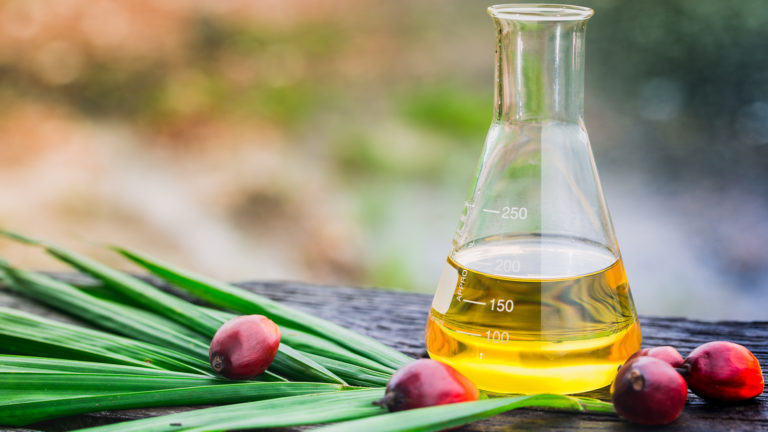
The many uses of palm oil
Palm oil's recent popularity is no surprise, given its wide range of uses, including cooking oil, food additives, biofuels and animal feed. These uses are similar to those of other edible oils such as soybean oil and rapeseed oil.
Palm oil's advantage lies not only in its wide range of uses but also in its high efficiency, with yields nearly five times those of other oilseeds. For example, each hectare of palm produces 3.3 tonnes of oil, compared with only 0.4 tonnes per hectare for soybeans and only 0.7 tonnes per hectare for rapeseed and sunflowers.
Palm oil production is highly concentrated. Indonesia, the world's largest palm oil producer, produced as much as 42.5 million tonnes in 2019/20. Malaysia came second with annual output of 19 million tonnes, followed by three major producing countries——Thailand, Colombia and Nigeria, whose combined output was 5.7 million tonnes.
India is the world's largest importer of palm oil, with imports expected to reach about 9.75 million tonnes in 2019/20. The next largest importers are the EU and China; China imported about 7.3 million tonnes of palm oil in 2019/20, enough to meet all of its domestic demand.
Palm oil prices
For most of 2019, palm oil prices rose steadily, but the sudden outbreak of COVID-19 brought that price rally to an end. After the outbreak, demand expectations fell and prices plunged accordingly.
Palm oil prices are affected by many factors, such as the pace of global economic recovery, the impact of pandemic-control measures on palm oil production in Indonesia and Malaysia, weather in major producing regions, and measures taken by governments to support producers and users.
Palm oil contracts on the Bursa Malaysia Derivatives (BMD) and the Dalian Commodity Exchange (DCE) serve as global pricing benchmarks for the palm oil market, with their futures contracts denominated in Malaysian ringgit and renminbi respectively. Palm oil contracts on the Chicago Mercantile Exchange (CME) are denominated in US dollars.
China and palm oil
In China, demand for palm oil is mainly driven by its use as cooking oil and as a key ingredient in the production of instant noodles and cosmetics.
Because palm oil is so important, China has in recent years begun to position itself upstream in the supply chain to secure supplies. For example, Julong Group has already developed a 50,000-acre palm plantation in Indonesia. At the same time, the Chinese Academy of Tropical Agricultural Sciences is trial-planting oil-producing palm trees in Hainan. However, since demand for palm oil will be negatively affected not only by the hot topic of COVID-19 but also by other hidden risks, whether China's demand for palm oil can remain at current levels remains to be seen.
Do risks to palm oil remain?
Efficient, large-scale hog farming will drive demand for soybean meal as a feed ingredient. Soybean oil, as a by-product of soybean meal production, will consequently be in oversupply. Because palm oil can easily be replaced by soybean oil, an oversupply of soybean oil could reduce demand for palm oil. As the phase-one economic and trade agreement between China and the United States removed some tariffs on US soybean imports, China's soybean imports from the United States also increased.
Another risk is changing consumer behaviour. If consumers favour other oils that are easier to obtain or appear more sustainable, this could be detrimental to palm oil production, and producers need to manage this risk in line with market developments.
Are there still opportunities ahead?
On the other hand, not all factors are bearish for palm oil, and many factors are driving China's demand for palm oil. The most important is the China-US trade agreement. In the agreement, China committed to purchasing USD 40 billion worth of US agricultural products, which could be bullish for palm oil.
African swine fever caused a sharp decline in China's hog herd, so China appears set to import more US pork. With less feed demand for soybean meal, soybean oil production will also decline along with soybean meal, which favours palm oil demand. If US pork production and transport are not severely affected by COVID-19, then this could push palm oil demand to a record high.
Another more obvious bullish factor is price. Palm oil is usually much cheaper than soybean oil. If the price spread between other edible oils and palm oil widens, then China's demand will not only remain at current levels but continue to increase.
Outlook
⟦NL>
Through China's investment in overseas palm plantations and meat companies, such as Shuanghui International Holdings Limited (now named WH Group) acquiring Smithfield Foods, one can glimpse China's plan to achieve domestic food security through overseas acquisitions.
On the other hand, Han Changfu, Minister of Agriculture and Rural Affairs of China, recently said that raising pork output is a main goal, indicating that the government does not want to rely on imports to boost hog production capacity. Either way, China's agricultural and food security policies could have a significant impact on future palm oil demand. Whether demand rises or falls depends on the path China chooses.