New Small Cucumber Varieties from Taiwan, China: Kaohsiung No. 3 Xiaqing and Kaohsiung No. 4 Xiazhi Cultivation Techniques and Optimum Temperatures
With global warming and climate change intensifying, under this increasingly warming environment, summer small cucumbers face production limits due to high temperatures, further affecting growth quality. Generally speaking, the optimum growing temperature for small cucumbers is 20-30°C. When the growing environment temperature is higher than 35°C, it causes physiological disorders, affecting the setting of female and male flowers and the shape and quality of the fruit, such as longer fruit stalks, smaller transverse diameter, shortened fruit length, pointed-tail cucumbers, waist-pinched cucumbers and other deformed fruits increasing in proportion, and it is also prone to forming bitter cucumbers. In response, after many years of trials and improvement, the Kaohsiung District Agricultural Research and Extension Station separately bred the varieties suitable for summer planting, "Xiaqing" (Kaohsiung No. 3) and "Xiazhi" (Kaohsiung No. 4).
Special varietal characteristics, suitable for Taiwan, China's climate and environment
After breeding, the small cucumbers Xiaqing and Xiazhi are both heat-tolerant varieties, quite suitable for the hot and humid environment of summer and autumn in Taiwan, China. Xiaqing has early flowering, a crisp and sweet taste, is suitable for whole-fruit consumption, and is heat- and humidity-tolerant in summer with high-yield characteristics, making it a variety with great development prospects. The plant is an indeterminate type, with female flowers setting at the 4th-5th node, and lateral vines bearing many female flowers. Early flowering; in spring and summer crops it takes about 28 days from transplanting to flowering, and in autumn crops about 32 days from transplanting to flowering. The fruit skin is emerald green, the flesh is green, there is fruit bloom, the skin grooves are not obvious, the fruit surface has white spines, the fruit length is 12-17 cm, the fruit width is 2-3 cm, and the single fruit weight is about 80-95 g. "Xiaqing" can be eaten as a fruit, in cold dishes, stir-fried, and so on, and different harvesting specifications allow for different ways of eating. When harvested at a fruit length of 12-15 cm, because of its crispness, light sweetness and lack of astringent taste, it can be eaten directly as a fruit; when harvested at 17 cm or more, it can be cut into pieces and stir-fried without peeling, which fits right in with the trend of the whole-food eating concept.
Similarly, Xiazhi also has the advantages of heat tolerance, high fruit set and green fruit skin. It is an indeterminate plant type, with female flowers setting at the 3rd-4th node, and lateral vines bearing many female flowers. Early flowering; in spring and summer crops it takes about 32 days from transplanting to flowering, and in autumn crops about 40 days from transplanting to flowering; the fruit skin is dark green, the flesh is green, the skin grooves are not obvious, the fruit surface has white spines, the fruit length is 17-19 cm, the fruit width is 2.5-3.5 cm, and the single fruit weight is about 95-115 g. Spring and summer in the Gaoping area are the most suitable cultivation periods. In terms of eating quality, the flavor is crisp and sweet with little astringency, making it very suitable as a fruit or in cold dishes.
Strong growth vigor, but cultivation and management principles still need to be mastered
In addition to their own excellent eating quality, Xiaqing and Xiazhi have strong growth vigor, and their characteristic of adapting to high-temperature and humid environments is even more commendable, making them very suitable for summer and autumn production. However, there are still several points to pay special attention to during cultivation:
Suitable for planting during the high-temperature period of spring and summer in the Gaoping area; in the central and northern regions, planting in the summer crop is recommended.
They are first-generation hybrids with monoecious flowers (separate male and female flowers on the same plant), and pollination by bees can increase yield. Kaohsiung No. 4 - Xiazhi has slight parthenocarpic fruit-setting ability when cultivated in winter.
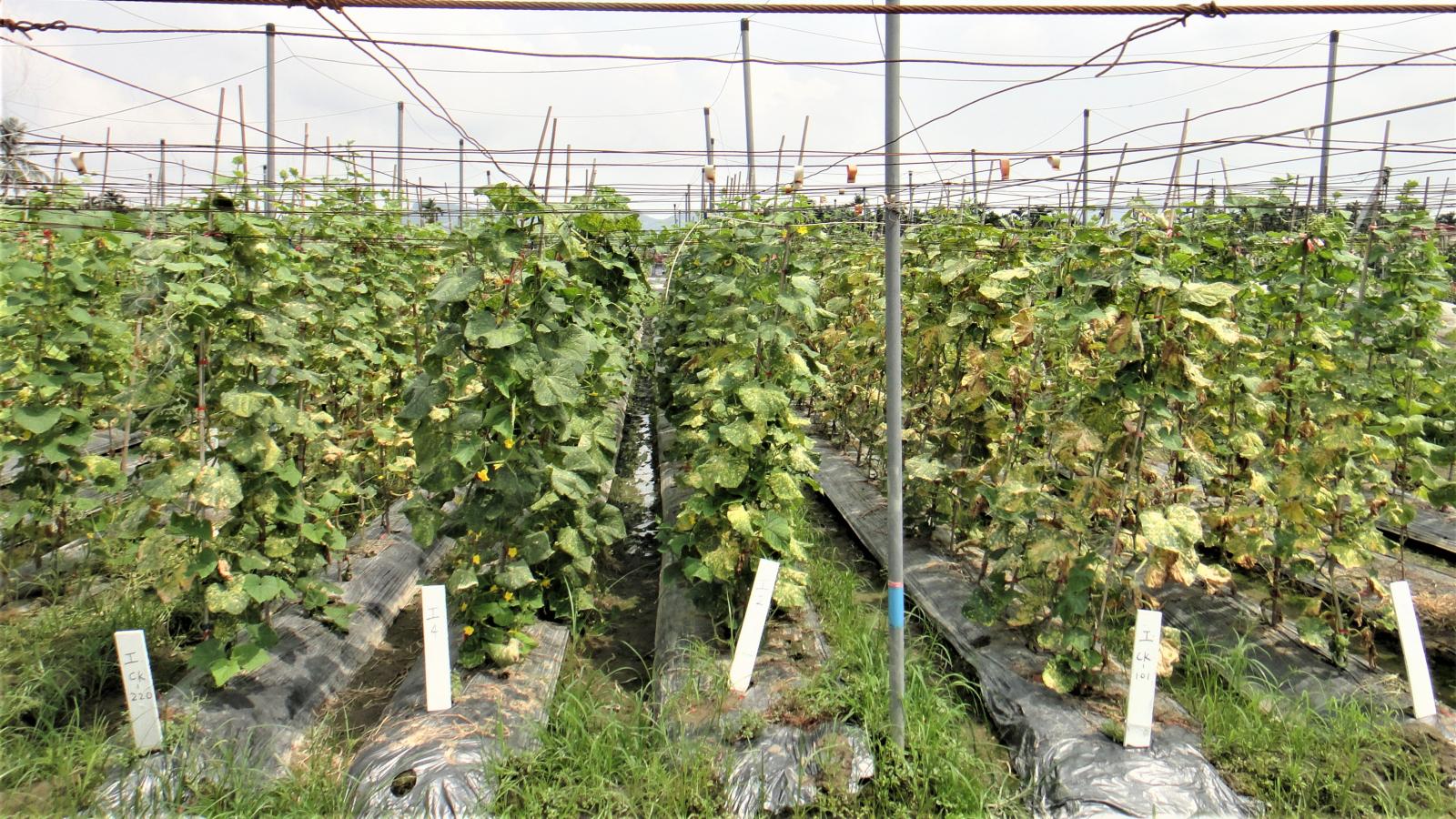
For the cultivation method, it is recommended to use arched ammonium pipe frames with melon netting or traditional crossed bamboo frames, with a row spacing of 1.1 m × 0.5 m, and to use simple protected cultivation to prevent damage from melon borers, melon fruit flies, virus vector insects and viral diseases. When temperatures are lower, it is recommended to use greenhouse facilities with heat-preservation functions for cultivation.
Both varieties have more roots, so nitrogen fertilizer application must be reduced to avoid overly vigorous growth that affects flowering and fruiting and produces bitter fruit.
Pruning method: They are indeterminate type and the main vine sets fruit at the 4th-5th node. To avoid affecting the plant's growth vigor, lateral buds and fruits below 20 cm on the main vine should be removed as early as possible, and at the same time tied and fixed well; lateral vines above 20 cm on the main vine can be pinched after leaving 2 nodes.
They have no resistance to any of the small cucumber pests and diseases, similar to existing cultivated varieties, and their control methods can be implemented by referring to the methods recommended in the plant protection manual.
The fruit appearance of Kaohsiung No. 4 "Xiazhi".
Since the optimum growing temperature for small cucumbers is 20-30°C, and temperatures in the Gaoping area in summer and autumn are often higher than 30°C, the high-temperature period is prone to poor pollination of fruit and pointed-tail and curved fruit. When choosing small cucumber varieties, farmers should distinguish by season or by the temperature at planting time, and choose suitable varieties for planting at different temperatures. Xiaqing and Xiazhi, in addition to their own excellent eating quality, have strong growth vigor and tolerance to high-temperature and humid environments, and have now been technology-transferred to Xinhua Seedling Company for seed production and sale.