Mountain Pig Loquat Cultivation and Management Techniques and Flower and Fruit Thinning Methods
The origin of the name Mountain Pig Loquat: there is a couple who devoted all their heart and passion to growing loquats. They grow loquats without pesticides or chemical fertilizers, so natural that even wild boars know to pick them to eat, so they simply named them "Mountain Pig Loquat"! Loquat tree cultivation and management, let's take a look together
The origin of the name Mountain Pig Loquat: there is a couple who devoted all their heart and passion to growing loquats. They grow loquats without pesticides or chemical fertilizers, so natural that even wild boars know to pick them to eat, so they simply named them "Mountain Pig Loquat"!Loquat tree cultivation and management, let's take a look together!
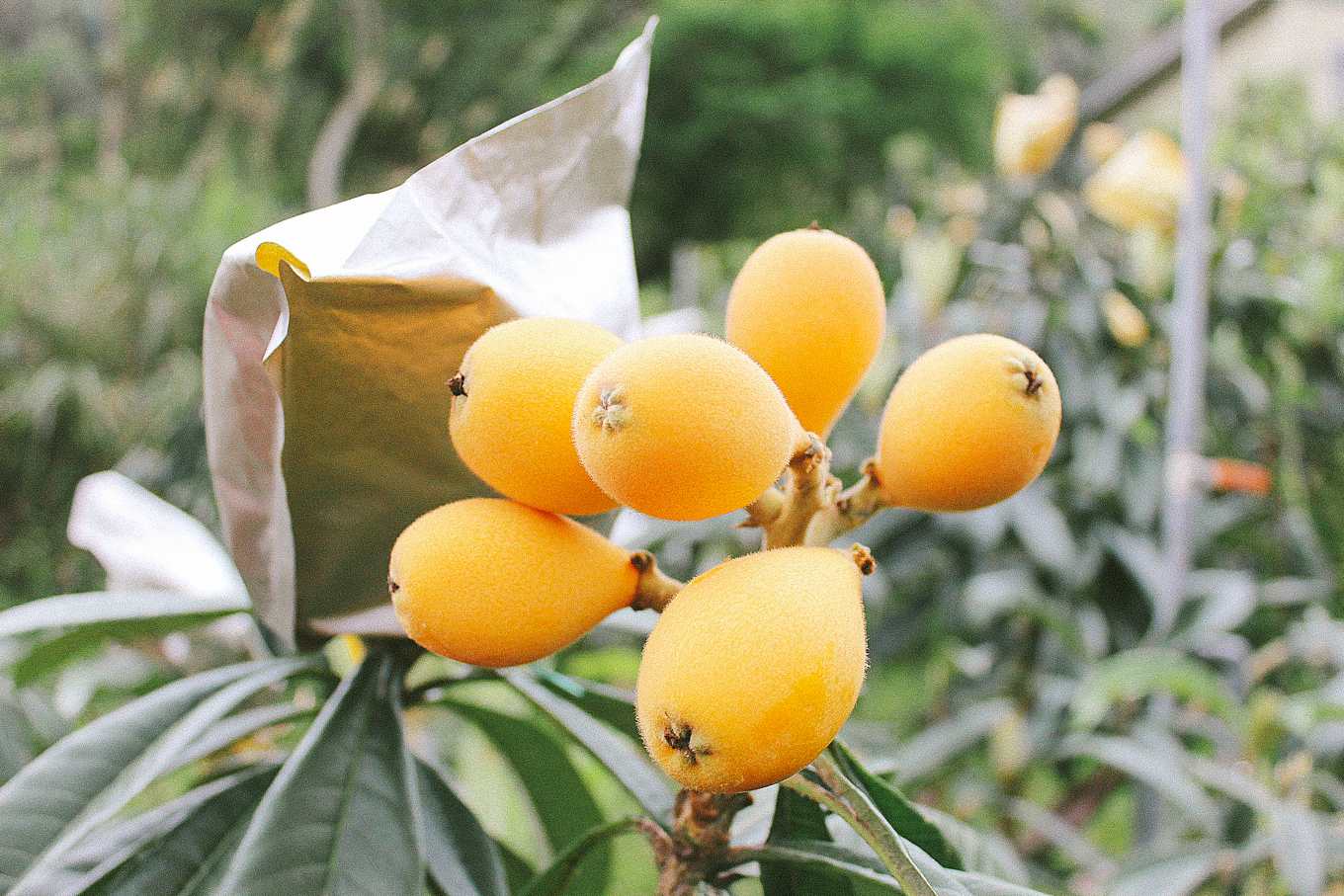
In the place where they grow loquats, looking from inside the work shed at the top of Luoshan Mountain toward the outside, as far as the eye can see there are nothing but loquat trees. March and April are exactly the season when loquats bear fruit, and golden and silver paper bags cover the fruiting loquats. Zhan Guirong, the person in charge of Mountain Pig Loquat, explained, "That is to ensure the loquat fruit grows up healthy inside." It looks like a Christmas tree tied with bell after bell, and the whole Xinshe mountain area is shaking with the blessings sent by loquats.
A six-year loquat learning journey, insisting on cultivation without pesticides
Loquats bloom in autumn or early winter and begin to bear fruit in spring and early summer. "From before the Lunar New Year to after Qingming, it is all loquat production season," explained Zeng Shengyan, another co-person in charge of Mountain Pig Loquat and also Zhan Guirong's husband. There is only one harvest like this in a year, and the harvest period is only a short two months or so. Such golden, delicate, fresh and tender loquats are actually so rare.
Their insistence on natural cultivation and not using pesticides or chemical fertilizers has stood firm and uncompromising from the very beginning. This provides a very good foundation for the taste of the loquats they grow.
Organic and eaten with the skin, concentrating nutrients makes loquats taste better
Organic and eaten with the skin are what Mountain Pig Loquat is most proud of, and "concentrating nutrients" is their biggest principle for growing good loquats. The important steps of "pruning branches," "flower thinning," and "fruit thinning" are all meant to supply nutrients fully to the fruit tree's growth stage for that period.
Zhan Guirong explained that after harvest every year, the orchard must undergo major renovation, trimming and shortening all branches, and then caring for the tender buds; next, after the flowers bloom, "flower thinning" must also be carried out. She said that each tree blooms about two hundred flowers, and "flower thinning" must remove half; after the flowers are pollinated, they begin to bear fruit, and at this time "fruit thinning" is also necessary, leaving about five to six fruits on each branch. When the fruits grow to a certain extent, paper bags are put on to protect the loquat fruit. Zhan also particularly emphasized that the fruit tree's new buds will also keep growing, so whether at the tender bud, flowering, or fruiting stage, one must always pay attention to whether new buds have grown out and cut them off.
Pests and diseases are a major challenge; one can only try to reduce their populations and coexist peacefully
Zeng Shengyan said that pests and diseases are also a major challenge in growing loquats. Anthracnose, angular leaf spot, red rust disease, gray leaf spot, sooty leaf spot, and black mildew are all diseases that loquat trees may develop. He said that one can only build up the fruit trees and adjust their constitution from the very beginning of pruning, but if branches unfortunately still become diseased, they are cut off entirely and burned so that no pathogens remain in the orchard.
Different seasons also bring different pest troubles. Litchi leaf mites, citrus leaf-rolling aphids, and other moths and butterflies are all uninvited guests in the orchard. Insects during the flowering period come to bite the flowers, and insects during the fruiting period come to eat the fruit. Even if paper bags are put on, small insects still find a way to drill into the bags and boldly enjoy a loquat feast.
Flourishing with all things, feeding loquats with organic soy milk
When the loquats ripen, wild boars run over to eat them, and Zhan and Zeng do not drive the wild boars away. Toward these "diners" big and small, they show an attitude of flourishing together with all things, which is also another kind of "certification" that Mountain Pig Loquat is delicious.
They do not spray pesticides and do not chase away diners, but when it comes to the nutrients that should be supplemented for the loquats, they are not careless at all. Zeng lifted up a piece of canvas, and underneath it were four or five tools for grinding beans. Zhan Guirong explained that they grind organic soybeans into milk, then ferment it and dilute it with water to provide nutrients for the loquats. This includes both "root irrigation" and "foliar fertilization" in parallel. "Friends often tell me, wow, the soy milk your loquats drink is even better than what people drink!"
It is precisely their care in growing Mountain Pig Loquat that makes this kind of Mountain Pig Loquat so delicate. Only when the loquat's color is orange-yellow enough can it be harvested. The stem connected to the calyx is cut off, then the dust and small leaves on the loquat's skin are brushed off, and it is gently placed into the collection bucket. If there is a little bump or a little scratch during collection, cracks or bruises appear immediately. It is a very difficult fruit to care for.
To grow any kind of crop and want a good harvest, you must manage it carefully. Otherwise, one small moment of carelessness will leave the crop's harvest or quality without any guarantee.