Four-Season Planting Methods and Year-Round Care Points for the Japanese Pagoda Tree
The Japanese pagoda tree (Sophora japonica) is a deciduous tree in the Fabaceae family and a common street tree and shade tree in our country, with a dense crown and a long lifespan, and strong tolerance to smoke, dust and harmful gases. So-called four-season planting means following the changes of the seasons and doing a good job of year-round management around transplanting, water and fertilizer, and pest and disease control.
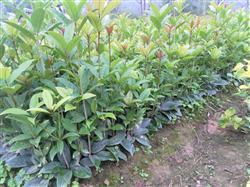
Spring is the period when the survival rate of transplanted Japanese pagoda trees is relatively high, and it is generally best done before bud break. Before planting, dig the tree hole well, apply decomposed organic fertilizer as a base fertilizer, after planting firm the soil and water thoroughly to settle the roots, and for larger saplings stakes should also be set up to prevent lodging. Pruning and shaping can also be done in spring, cutting out dead branches and diseased branches so that the crown is well ventilated and lets light through.
In summer the Japanese pagoda tree enters its vigorous growth period and needs a relatively large amount of water, so it should be watered in time during drought, while in the rainy season attention should be paid to drainage to avoid long-term waterlogging that causes root rot. During this stage pests such as the pagoda aphid (Aphis sophoricola) and the geometrid moth are frequent, so pay more attention to the leaves and young shoots in normal times and deal with any pest infestation as early as possible. Young saplings newly planted that year can be appropriately shaded during high-temperature periods to reduce water evaporation.
After leaf fall in autumn is likewise a suitable period for transplanting the Japanese pagoda tree, and watering thoroughly after planting helps the root system recover. Before winter begins, the soil can be loosened in combination with fertilizing, and the freezing water should be watered well to improve the cold resistance of young trees. For newly planted young trees in cold northern regions, the trunk can be wrapped with straw rope or whitewashed to prevent freezing damage and sunscald.
Overall, the key to four-season planting of the Japanese pagoda tree lies in spring planting, summer management, autumn nurturing and winter protection, and farm work can simply be arranged according to the seasons. A well-managed plant has a proper tree shape and luxuriant branches and leaves, with a good greening and shading effect, and its flower buds (huaimi) and seed pods (huaijiao) can also be used as medicine, making it a widely used native tree species.
Related Reading