The main producing areas of longan are mainly distributed in Guangdong, Guangxi, Fujian and other places.
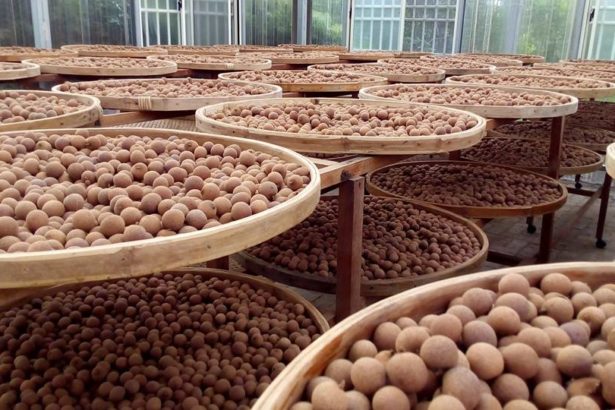
Longan is a tropical and subtropical evergreen fruit tree of the genus Dimocarpus in the family Sapindaceae, native to southern China. Its fresh fruit is sweet and juicy, and it can also be processed and dried into dried longan, commonly known as guiyuan, making it a common fruit and nourishing food ingredient in southern regions. Longan has strong adaptability and is cultivated in many warm-climate areas.
In terms of distribution, the main production areas of longan in China are concentrated in South China. Guangdong, Guangxi and Fujian are the traditional main producing areas, while Hainan, Yunnan, Sichuan and other places also have considerable scale of cultivation. Among them, the western Guangdong area, many counties and cities in Guangxi, and the Putian area of Fujian have a long history of cultivation and are quite famous. In Taiwan, China, longan is widely distributed in hills and flatlands at low to medium altitudes, with more cultivation in Tainan, Chiayi, Nantou and other counties and cities, and the dried longan industry around Dongshan in Tainan is especially well known.
Climatic conditions have a great influence on the formation of producing areas. Longan likes a warm and humid environment with sufficient sunshine. It is heat-tolerant but not cold-tolerant, and requires a relatively long frost-free period to overwinter and bloom normally, so the producing areas are mostly located in tropical and subtropical regions. As for soil, land with deep soil layers, good drainage and slight acidity is suitable, while low-lying waterlogged places are unfavorable for growth.
In addition, longan is also an important nectar plant. During the flowering period, bees can collect nectar to make longan honey, so longan producing areas are closely related to the beekeeping industry. However, the flowering period is easily affected by weather. If the winter is warmer and the temperature difference is insufficient, flower bud differentiation will be affected, and the subsequent fruit-setting rate will also fluctuate. This is a common cultivation problem in producing areas.
Related Reading