A Detailed Guide to the Benefits, Effects and Culinary Uses of He Shou Wu (Polygonum multiflorum)
He Shou Wu is the dried tuberous root of the Polygonaceae plant Polygonum multiflorum. It is produced in many provinces in southern China and is a tonic variety with a long history of use in traditional medicine. Its tuberous root is mostly irregularly spindle-shaped, with a reddish-brown surface; on the cut surface, a cloud-brocade-like pattern can be seen, which is also the identifying feature often mentioned when selecting high-quality He Shou Wu.
According to traditional medicinal usage, He Shou Wu is divided into raw He Shou Wu and prepared He Shou Wu. Raw He Shou Wu focuses more on detoxifying and reducing abscesses, and moistening the intestines to relieve constipation; after processing, prepared He Shou Wu is relatively milder in medicinal nature and is mostly used to tonify the liver and kidneys, benefit essence and blood, darken the beard and hair, and strengthen the tendons and bones. It often appears in medicinal food formulas for regulating qi and blood and improving premature graying of the beard and hair.
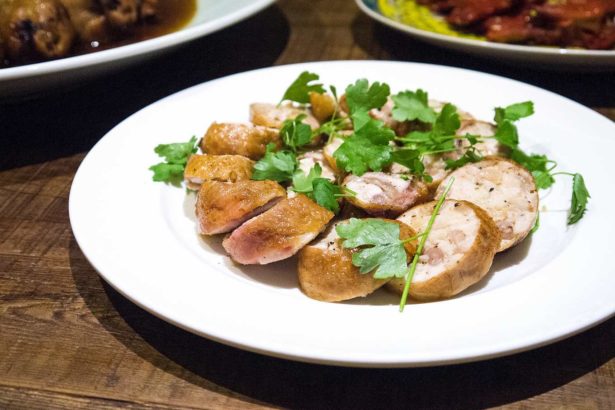
In terms of culinary methods, He Shou Wu is most commonly added to soups and stewed, for example simmered together with chicken, pork ribs, black beans and other ingredients over low heat until the ingredients are soft and the broth is rich; it can also be cooked into porridge with red dates and goji berries, or sliced thinly and steeped in water or wine. For household consumption, processed He Shou Wu should generally be chosen, and attention should be paid to controlling the amount used; it is not advisable to overconsume.
It should be noted that raw He Shou Wu carries a certain toxicity, and it is not recommended to take it in large amounts or over the long term on one's own. There is also a folk saying that iron utensils should be avoided when decocting it. Pregnant women, children, and people with poor liver function should be even more cautious, and it is best to use it under the guidance of a traditional Chinese medicine practitioner based on pattern differentiation, so as to truly bring out its food-nourishing value.
Related Reading