Dragon fruit is the fruit of a cactus-family plant, and it does not grow on trees.
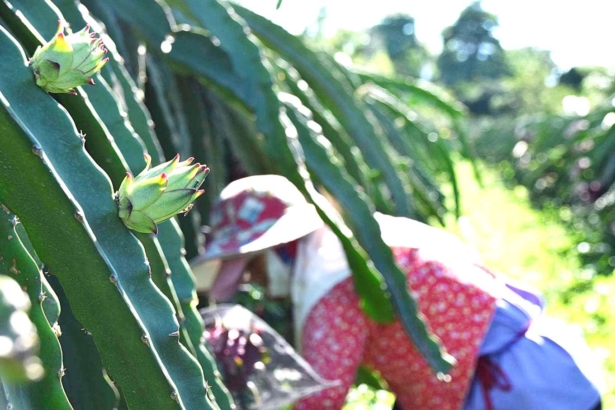
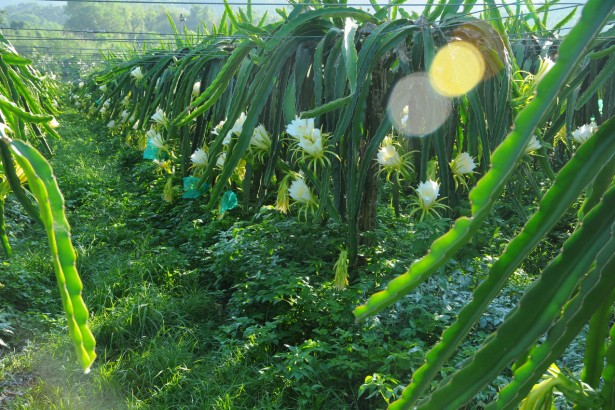
Dragon fruit is not the fruit borne by some kind of tree, but rather the fruit of climbing succulent plants in the cactus family, such as those of the genus Hylocereus, commonly known as the dragon fruit plant. These plants have fleshy stems and aerial roots, and they need to climb up supports to grow upward. They usually bloom at night, with large, pure white flowers, and they have value both as a fruit crop and as ornamentals.
In appearance, dragon fruit has bright red skin covered with scale-like bracts, resembling leaping flames, which is also the origin of its name. The flesh is commonly white or purple-red, with tiny black seeds evenly scattered throughout, and it tastes sweet, juicy, and refreshing. Besides the common red-skinned type, there are also yellow-skinned varieties on the market, whose flesh is finer and sweeter, but which are relatively harder to grow.
In cultivation, dragon fruit is drought-tolerant and afraid of waterlogging, and it prefers an environment with ample light and good drainage. When planting, upright posts or trellises are usually set up for the stems and vines to climb, and pruning is used to maintain ventilation and light penetration. Its root system is relatively shallow, so during the rainy season especially, waterlogging and disease must be prevented. With proper management, it can bear fruit for many years in a row, making it a common choice for diversified operations in many orchards.
It is worth noting that in hot and humid environments, dragon fruit is prone to diseases such as phytophthora blight and stem rot, so field drainage and ventilation management must not be neglected. At the same time, in recent years some production areas have expanded planting rather quickly, supply fluctuates noticeably with market conditions, and prices also rise and fall frequently, so growers need to comprehensively consider sales channels and costs before expanding production. For consumers, simply choose fruit with glossy skin and a plump body; storage at room temperature or under refrigeration gives each its own distinctive flavor.
Related Reading