A Detailed Guide to Fruit Tree Grafting: Master the Methods and Timing to Improve Success Rates
Fruit tree grafting is a commonly used asexual propagation technique in fruit tree cultivation. It refers to taking the branch or bud of one fruit tree as the scion and grafting it onto another fruit tree or rootstock, so that the two heal together into a new plant. In this way, the new plant can both retain the excellent traits of the scion variety and gain stronger adaptability through the rootstock.
Compared with propagation from seed, the greatest advantage of grafting is that it can stably inherit the varietal characteristics of the mother tree. For fruit trees such as mango, lychee, and citrus, which are prone to variation due to cross-pollination, seed propagation often fails to produce fruit of the same quality as the mother tree, while grafting can maintain varietal consistency. In addition, choosing a suitable rootstock can also allow fruit trees to bear fruit earlier, dwarf the plant, or enhance tolerance to waterlogging and resistance to disease.
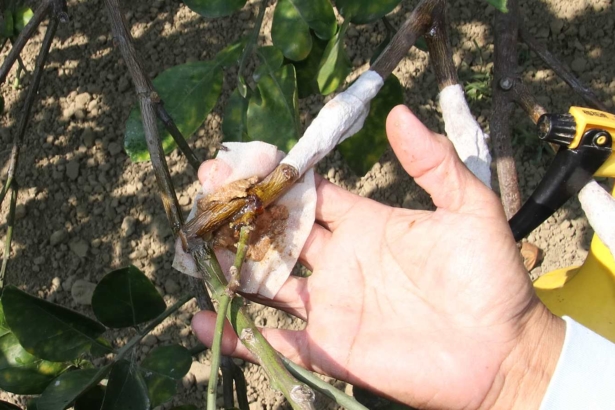
Common grafting methods include cut grafting, cleft grafting, bud grafting, and side grafting. Branch grafting is mostly carried out in spring when the sap begins to flow, while bud grafting is often scheduled for summer and autumn when the bark is easy to peel. The key to the operation is that the cambium layers of the scion and rootstock must be aligned and pressed together, the cuts must be smooth and flat, and the binding must be tight. After the graft has taken, the binding should be removed promptly, and new shoots sprouting from the rootstock should be wiped off.
Care after grafting is equally important. The graft union should be kept moist, protected from strong sunlight and soaking by rain, and after new shoots emerge, ventilation and hardening of the seedlings can be carried out gradually. For old orchards that have borne fruit for many years and whose quality has declined, fruit growers often use top grafting to change varieties, allowing the orchard to resume production more quickly. This is a commonly used method of renewal and variety replacement in fruit production.
Related Reading