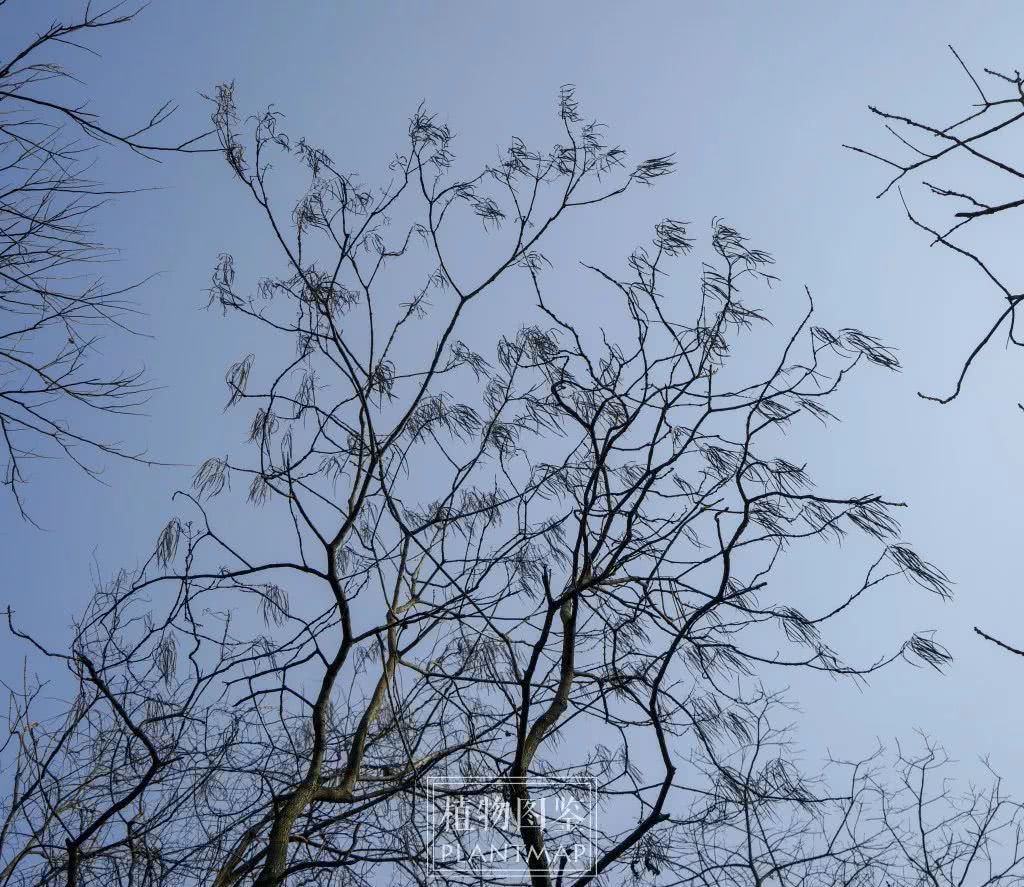
The catalpa tree is a native tree species with both ornamental and practical value
The catalpa is a deciduous tree of the genus Catalpa in the family Bignoniaceae, and it is also a traditional native tree species in China, widely cultivated in various regions. It has a tall form and an open crown, with broad ovate leaves that are entire or slightly lobed. It blooms in late spring and early summer, with pale yellow corollas marked with purple spots on the inside; after flowering it produces slender capsules that often persist on the branches into winter, making it quite ornamental.
The catalpa has a long history of cultivation. In ancient times people often planted it in front of and behind their houses, and together with the mulberry it was regarded as a symbol of home, which is why "sangzi" (mulberry and catalpa) became a byname for one's native place. An old saying holds that no wood is better than catalpa, showing how highly its timber was praised. In the old days, block printing often used catalpa wood to make printing blocks, and later people came to call the publishing of books "fuzi" (handing over to the catalpa).
Many people easily confuse the catalpa with the Manchurian catalpa (Catalpa bungei); both are trees of the genus Catalpa and look similar. Generally speaking, the Manchurian catalpa has smaller leaves that are usually not lobed, flowers that tend toward pinkish white, and a more straight, upright trunk; the catalpa often has slightly lobed leaves and flowers that tend toward yellowish white. Both trees are suitable as shade trees and street trees, and are often mentioned together.
The catalpa likes light and tolerates slight shade; it is fairly cold-hardy and not demanding about soil, growing best in deep, moist and fertile sites. Propagation is mainly by sowing, though cuttings can also be used. Day-to-day management is relatively extensive; pay attention to water and fertilizer supply during the young tree stage, and once mature the tree has few pests and diseases. It can be used as a street tree, shade tree or as a specimen planting for ornament, and its wood can also be used to make furniture and carvings, so its uses are quite wide-ranging.