The difference between the catalpa tree and the Manchurian catalpa, and why is it said that no wood is better than catalpa?
The term "sangzi" (mulberry and catalpa) represents one's hometown.
The mulberry tree needs no explanation. What the ancients called "zi" was the catalpa tree, but it often also included the Manchurian catalpa (and possibly other plants of the genus Catalpa). Both the catalpa tree and the Manchurian catalpa are native trees found in Hangzhou, cultivated in botanical gardens and along the West Lake. These two trees are widely distributed, and they also grow in Beijing. I have seen catalpa trees near the Prince Gong Mansion, and Manchurian catalpas are planted in the Olympic Forest Park.
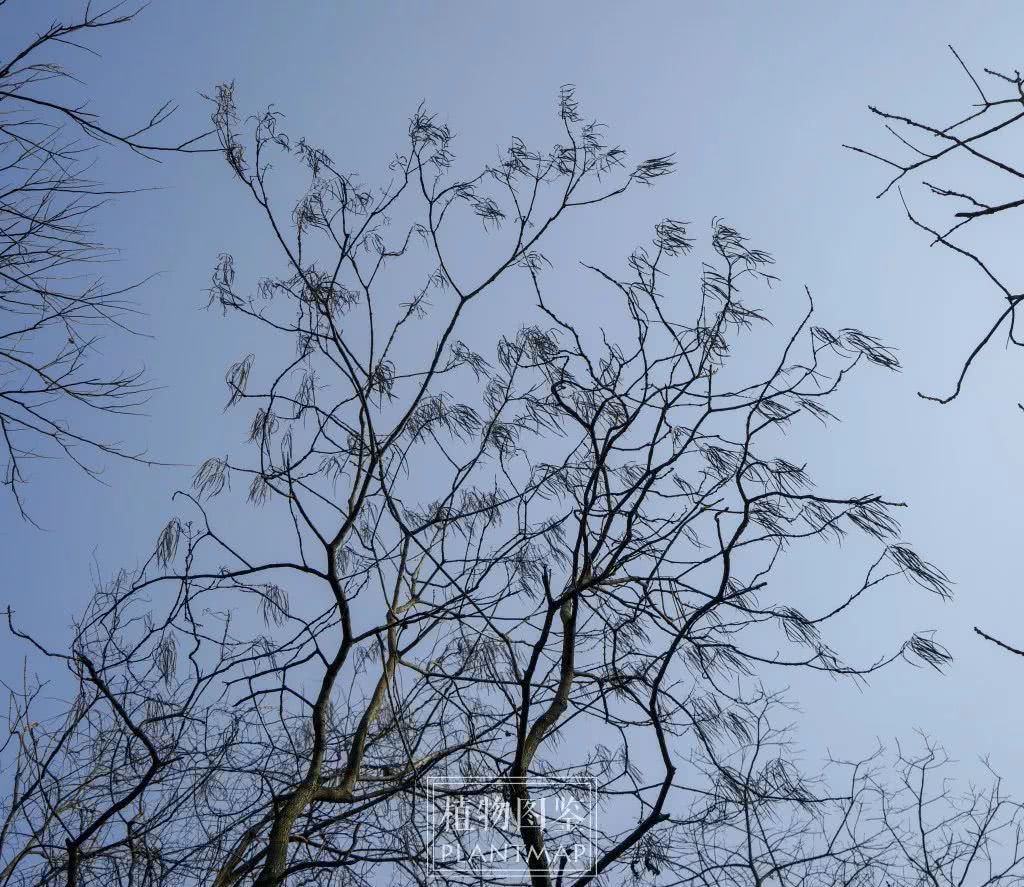
Both trees belong to the genus Catalpa in the family Bignoniaceae. They look somewhat similar, especially after fruiting in summer, when slender "noodles" hang from the trees, which is quite interesting. So I collectively call them "noodle trees." The "noodle" fruit is the most distinctive feature of these two trees. In winter, the fruit splits open, and the white fluffy seeds inside scatter and fly away.
It is now the end of June, and some withered flowers still hang on the catalpa tree. The catalpa blooms relatively later than the Manchurian catalpa, with its peak blooming period in late May and early June. The Manchurian catalpa, on the other hand, blooms at its fullest in late April.
The above is the catalpa tree
The flower shapes of the two are similar, but the catalpa is yellow and the Manchurian catalpa is pink, and the flowers of the Manchurian catalpa are also slightly larger. The flower shape is roughly bell-shaped, with irregular wavy edges along the opening.
The top image shows the catalpa tree, and the bottom image shows the Manchurian catalpa
Looking toward the center of the flowers, you can see irregularly scattered dot patterns and two yellow stripe-like markings on the inner side of the corolla in both flowers. These patterns serve to guide insects inside to collect nectar.
The above is the Manchurian catalpa
Image from the internet [1]
Both the catalpa tree and the Manchurian catalpa are excellent timber trees with a long history of use and have been endowed with rich cultural significance.
In "Chinese Tree Taxonomy" it is written: "It grows quite fast in suitable sites. In spring, the tree is covered with white flowers; in autumn and winter, the pods hang like beans. The wood is white and somewhat soft, and can be used for furniture. It is used to make the bottom of musical instruments, which is what is meant by 'paulownia on top and catalpa on the bottom.' Since ancient times, it has been considered that no wood is better than catalpa. The Book of Documents has a chapter titled 'Catalpa Timber,' and the Book of Rites names craftsmen after the 'catalpa man.' People liked to plant mulberries and catalpas beside their homes as provisions for both life and death, and thus to this day 'sangzi' (mulberry and catalpa) is used to name one's hometown. However, what the ancients called 'zi' often also referred to the Manchurian catalpa." This passage by our predecessors is a highly condensed summary of the characteristics of the catalpa and the Manchurian catalpa, so I will not presume to show off my meager skills before an expert.
So how do you distinguish the Manchurian catalpa from the catalpa when they are not in bloom? Our predecessors also summarized the experience long ago. In "Illustrated Names and Things of the Book of Songs," we can see the difference in leaf shape between the two:
The leaves of the catalpa tree are generally three-lobed, broad and large, with three small pointed tips; while the leaves of the Manchurian catalpa vary in the number of lobes. According to my observation, the heart-shaped, unlobed ones are the most common.
In the herbal illustrated volume "Traité chinois de botanique médicale," we can see the difference in tree form between the two:
The catalpa tree is "crooked and twisted," while the Manchurian catalpa has a straight trunk. This is indeed the case.
[1]HorsePunchKid,CC BY-SA 3.0,https://commons.wikimedia.org/w/index.php?curid=26355041
Author: Jiang Mouren
Images: Jiang Mouren (unless otherwise noted)
This work is licensed under a (CC BY-NC-ND 4.0) license agreement
Please retain the above statement when reposting