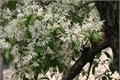
The fringetree is an ornamental flowering tree and also an excellent rootstock for grafting osmanthus.
The fringetree (Chionanthus retusus) is a deciduous tree of the genus Chionanthus in the family Oleaceae. It gets its name because when it blooms, the whole tree is covered in white flowers shaped like fringes; it is also known by other names such as April snow, shredded radish flower, and glutinous rice tea. It is widely distributed across both northern and southern China, commonly found in sunny spots such as hillsides and riverbanks, and is an excellent garden ornamental tree and street tree.
Its tree form is tall and upright, with dense branches and leaves; the leaves are opposite and elliptical. Every year in late spring and early summer it enters full bloom, with small white flowers densely covering the branches, looking from a distance like snow weighing down the whole tree, creating a very striking ornamental effect. After the flowering period it produces elliptical drupes, which turn blue-black when ripe.
The fringetree has strong adaptability; it likes light and also tolerates slight shade, is cold-resistant and drought-tolerant, and is not strict about soil, though it grows better in deep, fertile, well-drained soil. In daily care, avoid waterlogging to prevent root rot. Young trees grow relatively fast and can be pruned and shaped as needed to develop an ideal tree form.
In production and application, the fringetree is a commonly used rootstock for grafting osmanthus. It has a well-developed root system and is more cold-resistant than osmanthus; osmanthus grafted onto it tolerates lower temperatures better in northern regions and grows more steadily, so it is widely used in osmanthus seedling propagation, which is one of the reasons it is highly valued by growers.
In addition, its flowers and young leaves can be used in some regions to make tea, giving it a certain value for development and utilization. When cultivating it, choose a plot with ample light and smooth drainage, and apply fertilizer and water reasonably during the growing season, and the fringetree will then bloom abundantly every year.