How to Graft Osmanthus onto Fringetree? Detailed Guide to the Method of Transforming It into an Osmanthus Tree
The fringetree is a tree species with very high ornamental value. Not only is it ornamental in itself, but it can also be used to graft osmanthus, transforming it into an "osmanthus tree" - isn't that amazing?
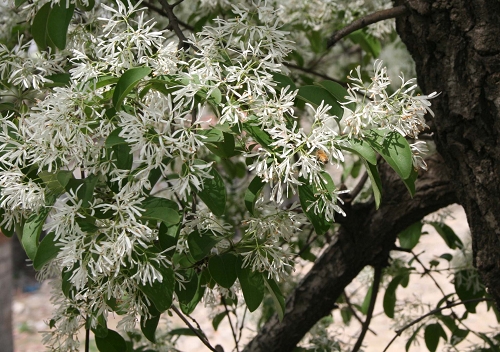
I. Introduction to the Fringetree
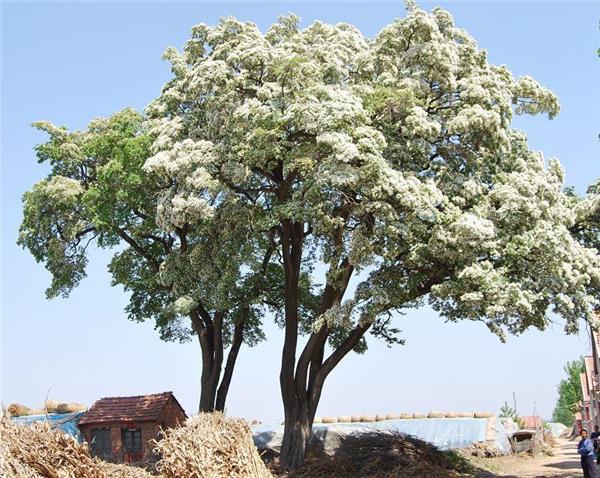
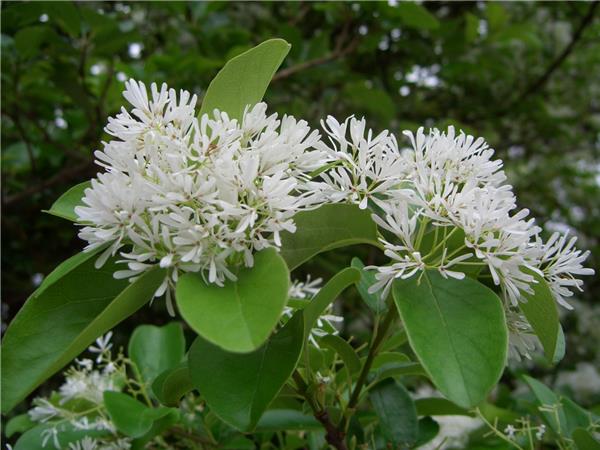
The fringetree, also known as shredded radish flower, tea tree, and April snow, is a deciduous tree in the Oleaceae family, genus Chionanthus. It can reach a height of 20 m. The branchlets are grayish brown or blackish gray, cylindrical, spreading, and hairless; young branches are pale yellow or brown, sparsely or densely covered with short pubescence. The tender leaves of the fringetree can be used as a tea substitute and have certain medicinal value. Its wood is fairly good and can be used to make utensils and for fine woodworking. The fringetree has luxuriant branches and leaves, large and beautiful flowers, and strong stress resistance, making it an excellent tree species for afforestation and ornamental use; its fruit has a high oil content, and it is also an important energy plant.
II. Growth Habits of the Fringetree
The fringetree prefers light and does not tolerate shade. It is cold-resistant and drought-resistant, and dislikes waterlogging. It grows relatively slowly, has a long lifespan, and tolerates poor soil. It is not demanding about soil, but grows best in fertile, well-aerated sandy loam. It has a certain tolerance to saline-alkali soil and can grow normally in mildly saline-alkali soil with a pH of 8.7 and a salt content of 0.2%, with no adverse reactions observed. It prefers light and is also fairly shade-tolerant. It likes a warm climate and is also quite cold-resistant. It likes neutral and slightly acidic soil, tolerates drought and poor soil, and does not tolerate waterlogging. It grows in sparse mixed forests or shrublands below 3000 m in altitude, or on hillsides and by riversides. It is cultivated in various places.
III. Planting Methods for the Fringetree
1. After the fringetree seeds are stratified in sand until March of the following year, when about 30% of the seeds have sprouted, the seedbed should be prepared and sowing carried out at the right time.
2. The nursery site should be chosen as land with good drainage, convenient irrigation, and deep, fertile soil. In North China, seedling cultivation uses high-ridge sowing in open fields. Generally, the ridge spacing is required to be 30 cm, the ridge height 20 cm, and the ridge top width 50 cm.
3. Apply sufficient base fertilizer, and open two rows of sowing furrows on both sides of each ridge top. The row spacing of the sowing furrows on the ridge top is 30 cm to 40 cm, and the depth of the sowing furrows is 2 cm.
4. Evenly scatter the pre-germinated seeds into the sowing furrows, with a sowing rate of 15 kg to 20 kg per mu, then cover the seeds with fine soil and mulch with grass to retain moisture. If dry weather occurs, water can be applied in the furrows to keep the seeds moist; when watering, do not let water flow over the ridge top, otherwise the soil is prone to crusting.
5. One month after sowing, the seedlings begin to emerge.
6. When the temperature is high and the light is strong, shade nets should be set up promptly for shading. If the seedlings are too dense, they can be thinned appropriately. In summer, the nursery land should be frequently cultivated and weeded to keep the soil loose.
IV. How to Graft Osmanthus onto the Fringetree
1. Cultivate the rootstock: The rootstock used for grafting needs to be robust in growth and free from pests and diseases, with a thickness of more than 1 cm, either a 2- to 3-year-old sapling or a 2- to 3-year-old branch on a perennial tree.
2. Select the scion: Osmanthus has varieties such as Jinguì, Yínguì, Danguì, and Sijiguì. First, choose the osmanthus variety according to preference, need, and available resources, then select from the chosen osmanthus tree a 2- to 3-year-old branch that is robust in growth, fully developed, free from pests and diseases, and moderate in size as the scion.
3. Grafting time: The grafting time for osmanthus is generally determined by the sprouting condition of the rootstock, mostly carried out from mid-to-late March to early April when the rootstock begins to sprout. Since osmanthus sprouts earlier than the rootstock, and once the scion sprouts, grafting is difficult to succeed, the scion should be collected in February before the osmanthus sprouts.
4. Grafting method: Use 2-year-old branches with a thickness of 0.3 to 0.5 cm, remove the leaves, cut the scion into small sections of 5 to 10 cm, with the upper cut 1 cm from the bud. Then soak them, and after they have absorbed enough water, place them in a cool place to retain moisture and store them in sand until taken out before grafting. After grafting, if branches sprout below the rootstock interface, they should be removed promptly. 31 to 35 days after grafting, cut off the scion from below the interface to let it separate from the mother plant.
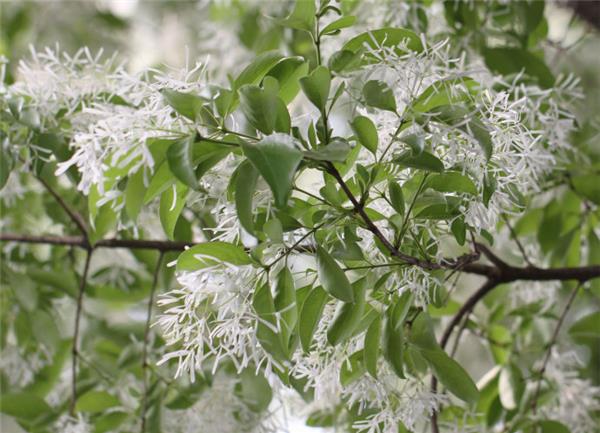
The technique of grafting osmanthus onto the fringetree is now fairly widely circulated, so there is also a lot of grafting experience. In this way, when everyone plants the fringetree and uses it to graft osmanthus, they can draw on the experience of others, which can save considerable time and effort.