The Oxalidaceae is a family of interesting plants whose leaves "sleep."
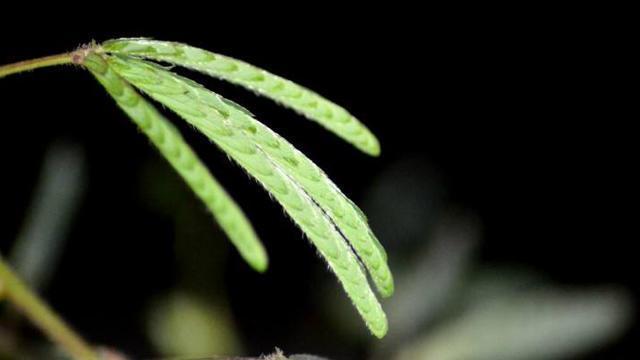
Oxalidaceae is a family in the angiosperms that is not especially large but is very common; the vast majority are herbaceous plants, though a few are shrubs and trees. The family's greatest identifying features are its leaves and flowers: the leaves are mostly palmately compound, and the common plants of the genus Oxalis usually have three leaflets. In many species the leaflets automatically close and droop at night or on overcast and rainy days, as if falling asleep, a phenomenon often called nyctinasty.
As for the flowers, plants in this family generally have five petals, in colors ranging from yellow, pink and purple to white and more. The two most representative genera in the family are Oxalis and Averrhoa. The genus Oxalis has a great many species: red-flowered oxalis (Oxalis corymbosa) blooms profusely with pink-purple flowers, purple-leaf oxalis (Oxalis triangularis) has purple-red foliage with leaves like little butterflies, and yellow-flowered oxalis (Oxalis pes-caprae) is a familiar sight on roadsides and field ridges; Averrhoa carambola, the star fruit, is the most famous fruit tree in this family, with a five-pointed-star-shaped cross-section and juicy, sweet-and-sour flesh.
In ornamental cultivation, oxalis-type plants are mostly propagated from bulbs or corms and like sunny, loose, well-draining soil. They grow vigorously in spring and autumn, and some species go dormant in summer, when watering should be reduced to prevent the bulbs from rotting. Their compact habit makes them suitable for growing in pots or dotting the edges of flower beds, and they are also an entry-level choice for many novice gardeners.
One thing to note is that the stems and leaves of oxalis contain oxalic acid and taste sour; eating a small amount is harmless, but eating a large amount is not recommended, to avoid affecting calcium absorption. Overall, as long as they get good light and drainage, these plants are mostly easy to grow and eager to bloom, offering both ornamental value and interest.
Related reading