New Bitter Gourd Variety: Differences Between Wild Bitter Gourd and Bitter Gourd and Suitable Growing Conditions
Wild bitter gourd is called a superfood. It can be called super because wild bitter gourd's medicinal benefits are great. Everyone must want to know what exactly makes this wild bitter gourd so exceptional? According to research reports, wild bitter gourd has "triple benefits of weight reduction, fat reduction, and blood sugar lowering." What is its mystery? Let us take a look together!
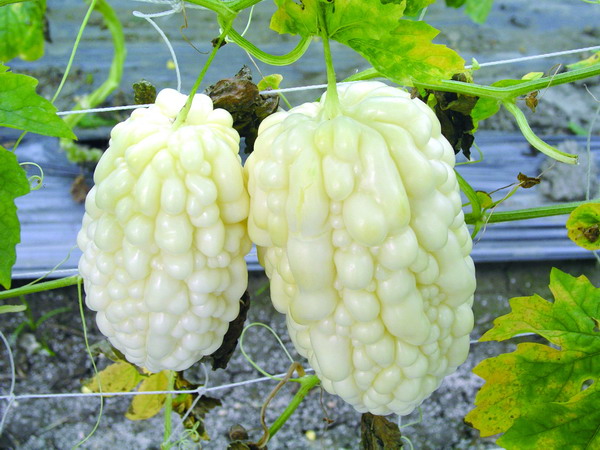
Generally speaking, on the market you can see various different varieties of bitter gourd, including green-fleshed bitter gourd, white-fleshed bitter gourd, and wild bitter gourd. Although they differ in appearance, all have a crisp, sweet-aftertaste, special flavor with bitterness.
Wild bitter gourd has more sweetness than bitter gourd,so what is the difference between wild bitter gourd and bitter gourd?
Wild bitter gourd is truly a trailing climbing herbaceous plant. The vines have tendrils and fine hairs and can climb. The whole plant has a distinctive odor, which to the human sense of smell is foul-smelling. The fruit shape is smaller than commonly cultivated bitter gourd, with fruit length 3 - 15 cm and fruit width 2 - 4 cm. The fruit color ranges from green to dark green.
Wild bitter gourd also contains "Momordicine," and like bitter gourd it has a bitter taste, but compared with ordinary bitter gourd it is more bittersweet. After cooking, it becomes bitter-sweet. Its young fruit can be used for cold dressing, stir-frying, boiling, or pickling and other cooking methods. Tender leaves, tender shoots, and flowers and fruits can also be boiled in soup. After the whole plant is dried, it can also be boiled as tea or added to other Chinese medicines to make instant powder tea bags, or sliced and processed by high-temperature baking and brewed into bitter gourd tea.
What is the suitable growing environment for wild bitter gourd?
The suitable germination temperature for wild bitter gourd seeds is 30~35°C, the suitable growing temperature for seedlings is 20~25°C, and during the flowering and fruiting period, 25~30°C with sufficient sunlight gives a higher fruit-setting rate, and fruit development is also faster. Under slightly lower temperatures and short-day conditions, the first flower mostly appears earlier, so the fruiting position will be lower.
Wild bitter gourd is a short-day plant, but it has no special requirement for the number of light hours. The plant likes light and is not tolerant of shade. If light is insufficient during the seedling stage, resistance to low temperatures will be reduced. Avoid continuous cropping, because the root system is very vigorous and its absorption of water and nutrients is also strong. Therefore, it is advisable to choose loam with good irrigation and drainage, rich in organic matter, and a pH value of 5.5~6.5.
How to select wild bitter gourd?
When purchasing, pay attention to whether the fruit body is well formed, whether the color is dark green or emerald green, whether the color is bright and glossy, whether the wart-like protrusions are obvious, whether it has not been bitten by bees, and whether the fruit warts are not split. If the fruit core is exposed or there is softening, it is overripe. If there is water bruising and rot or insects, do not buy it.
Selection principle: For bitter gourd, choose the ones with larger and fuller fruit warts, which are best. Full ones have thick, substantial flesh and good flavor. Conversely, those with smaller granules have relatively thin flesh and poor texture.If selecting those with bright, plump skin and no disease spots or scars, bitter gourd with sunken, dried skin is less fresh.
Selection principle: Wild bitter gourd is the opposite. No matter how large it grows, those with darker color and denser fruit warts are better.
How to wash wild bitter gourd?
The skin of wild bitter gourd fruit is wart-grained. After buying it, if you are going to eat it that day, first soak it in clean water for about 15 minutes to let pesticides hydrolyze, then gently scrub along the wart lines with a soft-bristled toothbrush. If there are cracks or it is overripe and red-yellow, then it should not be soaked in water. It can be rinsed clean under a faucet and set aside.
Fresh wild bitter gourd is usually kept at room temperature for 1-2 days, or wrapped well to prevent cold injury and stored in the refrigerator for 3-5 days. Overripe ones need to be eaten within 1- 2 days so they are less likely to cause a burning mouthfeel or rot.
If it is organic wild bitter gourd, in theory no pesticides were used during cultivation, so after scrubbing along the wart lines with a soft-bristled toothbrush, rinse with clean water.
The principle by which wild bitter gourd regulates blood sugar and blood lipids
Wild bitter gourd has the functions of reducing internal heat and resisting inflammation. Later it was further discovered that wild bitter gourd extract can activate PPAR (Peroxisome Proliferator Activated Receptors), and this receptor plays a vital role in human metabolism. When PPAR is suppressed, it easily causes metabolic disorders in adipose tissue and liver tissue, which can easily lead to excessively high blood sugar and then diabetes, and may also cause cardiovascular disease and cancer. Among bitter gourd varieties, wild bitter gourd and green bitter gourd have the best effects.
According to animal experiments, research conducted in the bodies of rats and mice found that the "ethyl acetate extract" in wild bitter gourd can "activate PPAR-α and -γ" components, and can improve weight gain induced by a high-fat diet, regulate blood sugar and blood lipids, and provide other benefits.
Fat-reducing benefits show special performance for central obesity
In addition to lowering blood sugar, the effects of bitter gourd also include inhibiting cancer cells, lowering blood pressure, lowering blood lipids, and various other effects. Many domestic studies have found that bitter gourd can not only improve hyperinsulinemia induced by a high-fat diet and very likely to develop into diabetes, but can also achieve weight reduction and lower blood lipids, and is especially useful for preventing abdominal fat accumulation.
In fact, many research institutions around the world are conducting research on bitter gourd. So far, studies have shown that bitter gourd has great development potential as a future treatment for diabetes and obesity.