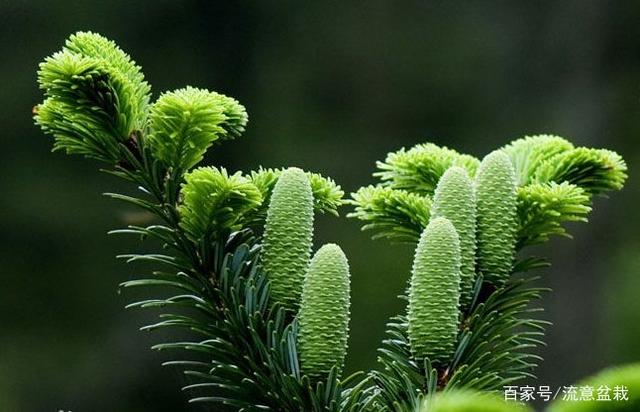
Baishanzu fir is known as a living plant fossil and is a national first-class protected plant.
Baishanzu fir (Abies beshanzuensis) is an evergreen tree of the genus Abies in the pine family, and it is also a rare tree species endemic to China, currently found in the wild only in the high mountain area of Baishanzu in Qingyuan County, Zhejiang Province. It is a relict plant left over from the Quaternary glacial period, with very few wild adult plants, and is listed as a national first-class key protected wild plant, known in the plant world as a living fossil.
In terms of morphological characteristics, its trunk is straight, its branches spread out in whorls, and its leaves are flat and linear, with a distinct white stomatal band on the underside. Its cones are upright and cylindrical, and when mature the seed scales fall off together with the seeds. Like most firs, it prefers a cool and humid climate and mostly grows on acidic mountain soils with abundant cloud and mist, small temperature differences and good drainage.
Its scientific research value is very prominent, and it is of great significance for studying ancient climate change, the evolution of plant flora and the geographical distribution of plants in the genus Abies. Due to difficulty in natural regeneration, unstable fruiting habits and a low seed germination rate, together with its narrow distribution range, the wild population was once on the verge of disappearing. Today it is mainly protected through rescue measures such as in-situ conservation, artificial breeding and ex-situ cultivation.
It should be noted that Baishanzu fir is a key protected plant that may not be dug up or traded privately, and keeping it as a household potted plant is not realistic. Flower lovers who like fir-type plants can choose common ornamental species in the genus Abies to try growing in pots. When caring for them, pay attention to creating a cool and humid environment, avoid high temperatures and direct sun exposure in summer, and keep the soil slightly moist without waterlogging when watering.
Related Reading