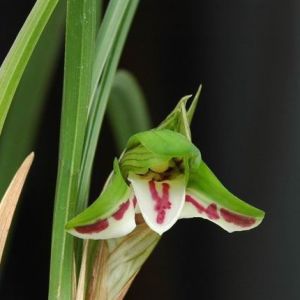
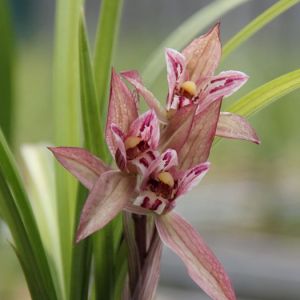
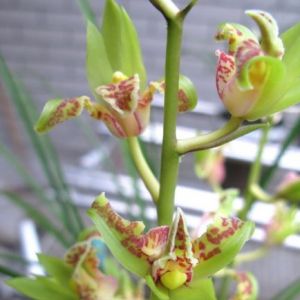
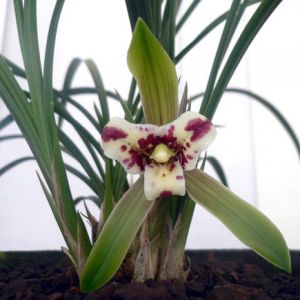
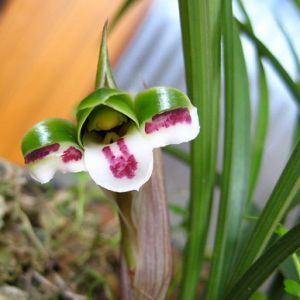
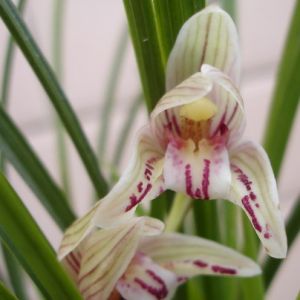
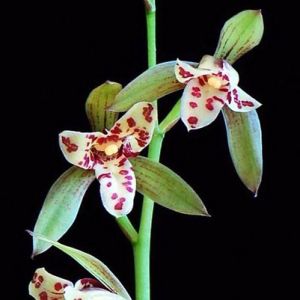
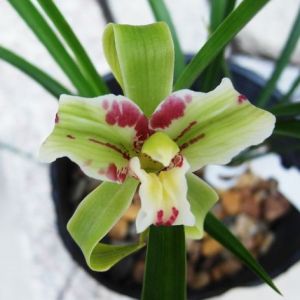
Wucai Die (Five-Colored Butterfly) is one of the richly colored varieties among the butterfly-type flowers of Chinese orchids (guolan).
Wucai Die (Five-Colored Butterfly) is one of the more closely followed names among the butterfly-type varieties of Chinese orchids (guolan), found mainly in the two major groups of Cymbidium goeringii (Chunlan) and Cymbidium tortisepalum (Lianbanlan). The commonly seen Wucai Die Chunlan and Wucai Die Lianban on the orchid market are ornamental varieties that share the same name but belong to different species. Both are named for their butterfly-like (diehua) flowers and rich colors, and are a type of rare flower among the terrestrial orchids of the Orchidaceae family.
From a floral-art perspective, the standout feature of Wucai Die is that the petals (the column petals or lateral petals) show varying degrees of lip transformation (labellization), displaying color and texture similar to the lip, with the overall flower shape resembling a colorful butterfly spreading its wings. The flowers commonly show a mix of green, white, red and other colors in distinct layers, which is where the name "Five-Colored" comes from. When in bloom it has a delicate fragrance, retaining the typical scent of its species.
It should be noted that the same butterfly-flower name does not refer to the same plant across different species. Wucai Die Chunlan usually blooms in early spring, with typically one flower per scape; Wucai Die Lianban comes mainly from the Yunnan area, blooms mostly at the turn of winter and spring, and differs noticeably from Chunlan in plant form and leaves. In addition, Ningbo Caidie, Yuehu Caidie, Xinchang Caidie, Huangguan Caidie and others belong to the same butterfly-flower line, and when buying one can distinguish them by combining leaf, blooming period and flower shape.
As for care, Wucai Die has habits similar to other terrestrial orchids; it is best to use a loose, breathable granular potting medium, water by letting the medium dry before watering again, and keep the pot moist but not waterlogged. It can be placed day to day in a well-ventilated environment with diffused light, avoiding direct strong light and long periods of stuffy humidity. Properly widening the day-night temperature difference in autumn helps flower bud differentiation and blooming on schedule; its flower shape is unusual and its colors striking, giving it fairly outstanding ornamental and collecting value.