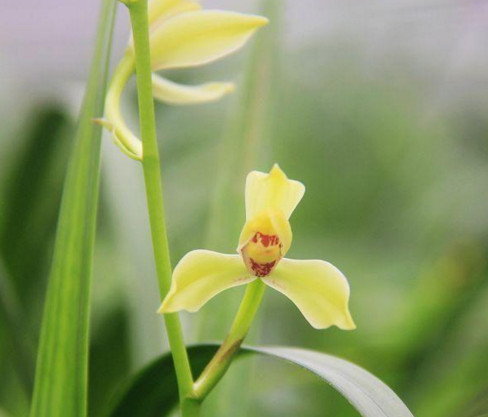
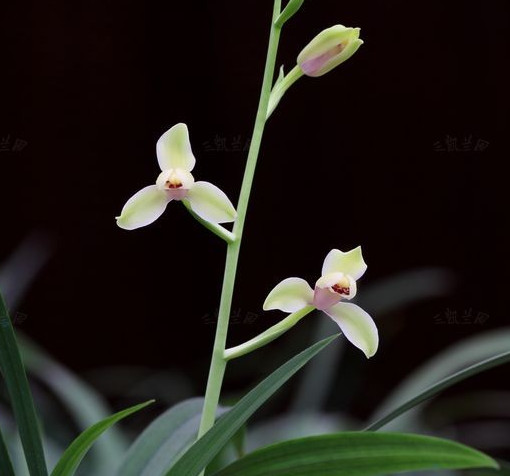
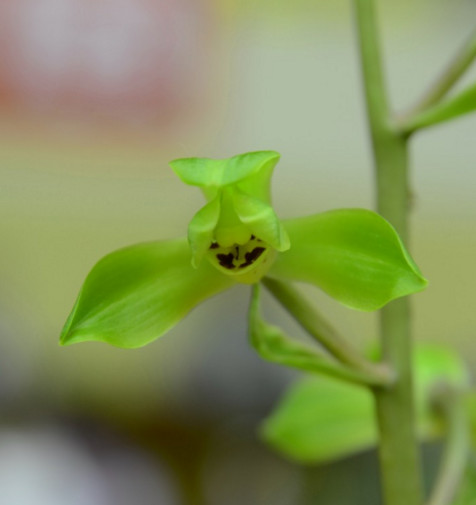
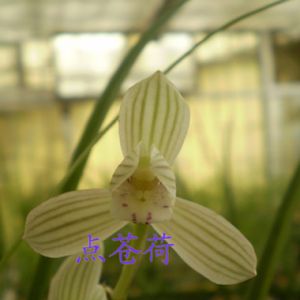
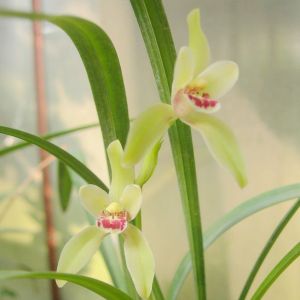
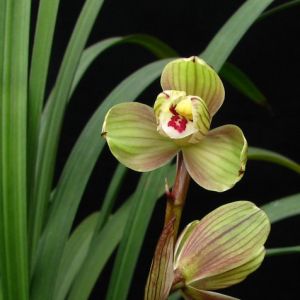
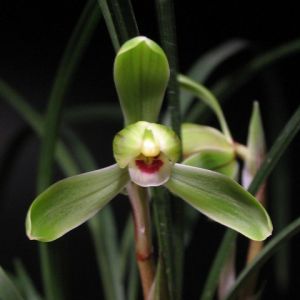
Peach Blossom Fairy is a pink-flowered ornamental variety of Cymbidium ensifolium (Fourseason Orchid).
Peach Blossom Fairy is the name of an orchid variety; among orchid enthusiasts it usually refers to a colored-flower variety of Cymbidium ensifolium (Fourseason Orchid), named for its blossoms that carry a pink-peach hue. Note that the same name occurs in the orchid world: other orchid species such as Cymbidium faberi (Faber's Cymbidium) also have varieties called Peach Blossom Fairy, so when buying or exchanging plants it is best to confirm using actual flower photos and the source, to avoid confusion.
The ornamental appeal of Cymbidium ensifolium Peach Blossom Fairy lies mainly in its flower color and flower posture; the blossoms are soft and pink, and the whole plant looks elegant and pleasing when in bloom. The flower color of colored-flower varieties is often affected by light, temperature and the vigor of the plant, and the summer flowers and autumn flowers of the same plant may differ in depth of shade. Being able to grow the color pure and bright is one of the great pleasures of cultivating colored-flower orchids.
As for care, Peach Blossom Fairy can be managed the same way as ordinary Cymbidium ensifolium. The potting medium should be loose, airy and well drained as a principle, commonly a mix of bark combined with granular potting medium; place it daily in a well-ventilated spot with diffused light, shade it appropriately in summer, and water so that the medium dries between waterings, avoiding long-term waterlogging in the pot. During the growing season, apply light fertilizer frequently, and in winter take care to protect it from the cold and keep it warm, letting the plant rest fully, which favors later flowering.
Cymbidium ensifolium mostly blooms in summer and autumn; a strong plant given proper care has a chance to flower several times within a year, and its fragrance is delicate and quiet, making it suitable for decorating a balcony, courtyard or indoor space. A common problem is that it only grows leaves and does not flower, which is mostly related to insufficient light, weak plant vigor or too much nitrogen fertilizer; you can gradually increase diffused light and adjust the fertilizer structure, and once the plant has accumulated enough nutrients, its flowering performance tends to become more ideal.
Related Reading