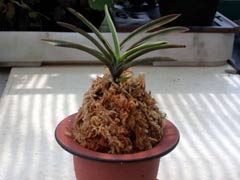
Black ebony bonsai grows slowly, so mastering the care methods is key
Black ebony bonsai is an ornamental bonsai cultivated from black ebony, an evergreen tree species of the genus Diospyros in the family Ebenaceae; this tree species is also known as ivory tree in some regions. It mostly grows in the warm areas of southern China, and gets its name from its hard, fine-grained wood and jet-black color. Its bark is grayish-black, its leaves are small, leathery, dark green and glossy, and its branches are vigorous and quaint, so it has long been loved by bonsai enthusiasts.
The most prominent feature of black ebony bonsai is that it grows very slowly, with limited shoot growth in a year, but once the tree shape is set it can be maintained for a long time, and the branch pads appear compact and delicate. This kind of tree species has a long lifespan, and the more it is grown, the more it takes on the look of an old tree. In addition, with a well-developed root system and tolerance to pruning, whether made into a single-trunk large-tree style or a forest style, it can present a quaint charm.
In daily care, black ebony likes a sunny, well-ventilated environment, and can usually be placed in a sunny spot, with appropriate shading only during high summer temperatures. Watering should follow the principle of letting the soil dry before watering again, and the pot must never be allowed to hold water for long periods, otherwise root rot is likely. During the growing season, apply thin fertilizer frequently, using some diluted organic liquid fertilizer. It has poor cold tolerance, so in northern regions it should be moved indoors in winter or given good insulation, and during that period the potting soil should preferably be on the dry side.
Pruning is mainly done by pinching to control branches, promptly removing leggy branches, crossing branches and diseased or weak branches, and keeping the layers of branch pads clear. Repotting is generally done once every two or three years, and well-drained sandy loam is preferable; operating when temperatures warm up in spring is more conducive to the plant's recovery. As long as you tend it patiently, a black ebony bonsai will become more vigorous after years of care, offering both ornamental and collectible value.