What Flower Is "Guose Tianxiang"? Explaining the Elegant Name for the Peony and the Names of Orchid Varieties
"Guose Tianxiang" was originally an elegant phrase describing the beauty of flowers, and for a long time it has been used to refer to the peony. The peony has a stately, graceful flower form and a rich fragrance. The ancients used "guose" (national beauty) to describe its beauty that could topple a kingdom, and "tianxiang" (heavenly fragrance) to describe its outstanding scent. Thus "guose tianxiang" gradually became a byword for the peony, and it is very common in poetry and everyday contexts.
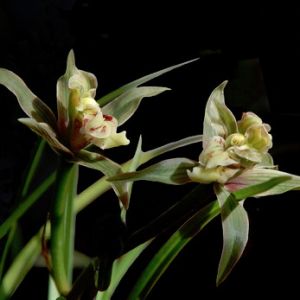
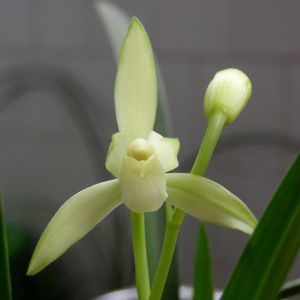
However, in today's flower market, "Guose Tianxiang" is also often used as the name of an orchid variety. Among Cymbidium tortisepalum (lianbanlan), there is a variety called Guose Tianxiang, and among Cymbidium ensifolium (jianlan) there is also a variety of the same name. Although the two share the same name, they belong to different orchid species, and their flower forms and blooming periods are clearly different.
Cymbidium tortisepalum is mainly distributed in Yunnan and other places. The variety of the same name is favored by orchid enthusiasts for its brilliant flower color and well-formed petals, and it usually blooms in winter and spring. Cymbidium ensifolium, also known as the four-season orchid, generally has broader leaves in the variety of the same name, blooms mostly in summer and autumn, with multiple flowers on one stem and a delicate fragrance. With proper care, it may be expected to bloom several times a year.
Whether it refers to the peony or to an orchid, Guose Tianxiang expresses people's admiration for the ultimate in flowers. When caring for this kind of orchid in daily life, it is best to use a loose, breathable growing medium, provide soft, diffused light, water only when the medium is dry and let it dry out between waterings, and maintain good ventilation, so that the plant can grow steadily and bloom on schedule. When you encounter the name Guose Tianxiang while buying or discussing plants, first determine whether it refers to the peony or to a specific orchid species, then judge by the characteristics of leaf shape and blooming period, and it will not be easy to confuse them.