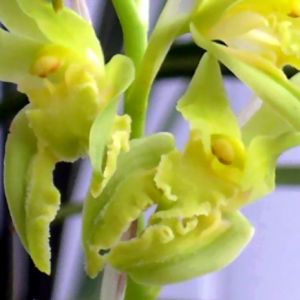
Daoba Xishi is a famous pink Cymbidium ensifolium cultivar: learn its characteristics and care essentials
Daoba Xishi is a well-known horticultural cultivar among orchids, mostly classified under the Cymbidium ensifolium (four-season orchid) group. The name Xishi borrows the name of an ancient beauty to describe its outstanding blooms, while daoba relates to the posture of the flower as it opens; the exact origin is explained somewhat differently among orchid growers. Thanks to its pink-toned flowers and good fragrance, it has long been a popular topic in orchid-growing circles.
In terms of characteristics, Daoba Xishi's flower color is mainly soft pink, with a transition from peach red to pinkish white, and the color tends to be deeper when the ambient temperature is lower. The petals spread out round and smooth, and the whole flower has a formal yet somewhat lively form, with a clear, delicate fragrance when in bloom. With proper care, it can bloom several times a year, and its willingness to bloom and grow vigorously is an important reason it is so well liked.
For care, it prefers a warm, humid, well-ventilated environment, and the potting medium should be a mix of loose, breathable materials such as bark, Kanuma soil (plant gold stone), and tree fern fiber, so the orchid roots can breathe freely. In spring and autumn, give it fairly ample indirect light, shade it appropriately in summer, and water according to the principle of letting it dry between waterings to avoid long-term waterlogging in the pot. During the growing season, apply light fertilizer frequently, and try not to move the pot during bud formation and flowering, so as not to affect bloom quality.
It should be noted that there is more than one orchid horticultural cultivar named after Xishi; the related reading on this site, Xishi Huilan, belongs to the Cymbidium faberi group, a different orchid species from Daoba Xishi, so when buying, do not choose based only on a similar name. For beginners growing Daoba Xishi, common problems are mainly root rot caused by overwatering and few, pale flowers caused by insufficient light. Pay attention to these two points in daily management, and it will adapt well to a home balcony environment, continuing to reward the grower as an ornamental flower.
Related reading