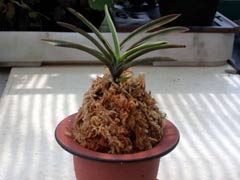
Characteristics and Care Methods of Dwarf Fruit Tree Bonsai
Dwarf fruit tree bonsai is a form of potted planting that combines dwarfed fruit tree cultivation with the art of bonsai shaping. By using dwarfing rootstocks, grafting spur-type varieties, or controlling water and fertilizer to suppress tree vigor, fruit trees such as apple, peach, citrus, and pomegranate are kept compact within a limited space. They allow you to enjoy both the form and the fruit, and also to harvest fruit.
Common varieties include dwarf apple, kumquat, lemon, pomegranate, fig, and flat peach. These bonsai have compact tree bodies, thick branches, and bear fruit relatively early, with a fairly long fruiting period, so ornamental fruit viewing and eating can be enjoyed at the same time. For shaping, traditional bonsai forms such as curved trunk and slanting trunk are often used, complemented by the fruit, making the ornamental value very prominent.
For care, fruit trees mostly like light and should be placed in a sunny spot on a balcony or in a courtyard. Only with sufficient light do they easily bloom and bear fruit. For watering, keep to the principle of watering when dry and letting them dry between waterings, and avoid water accumulation in the pot that causes root rot. During the growing season, apply light fertilizer frequently, and appropriately supplement phosphorus and potassium fertilizer during the flowering and fruiting period. Usually, regular pruning is also needed to control the tree shape, and timely thinning of flowers and fruit prevents nutrients from being dispersed. Repot once every one to two years and trim the aged roots.
Dwarf fruit tree bonsai are small in size and easy to move, suitable for balconies, courtyards, and other places with limited space, combining ornamental value, edible use, and greening. Beginners often encounter the problem of flower and fruit drop during care, which is mostly related to insufficient light and fluctuations in water and fertilizer. Keep the environment stable and manage it properly, and the situation can gradually improve.