Is Tradescantia (Spiderwort) Toxic? Understanding Its Toxicity in One Article
1. Is It Toxic?
Based on existing research on it, Tradescantia itself is not toxic, so you can safely keep it at home and grow it without any threat to us. In fact, not only is it non-toxic, but it also has a very effective detoxifying ability. Let's take a look at its value next.
2. Medicinal Value
According to existing documentary records about Tradescantia, although it tastes somewhat bitter, every part of it can be used as medicine. Generally, herb growers harvest this plant in autumn or summer; after harvesting, they dry it in the sun to remove moisture, then air-dry it in a shady room, after which it can be ground into powder and used as medicine.
Tradescantia can be used to promote blood circulation and remove blood stasis, and it can also dissolve lumps on the body; it can also be used to treat toxic swellings and to relieve gonorrhea to a certain extent. When Tradescantia is used as medicine, it can be applied externally or taken internally.
3. Ornamental Value
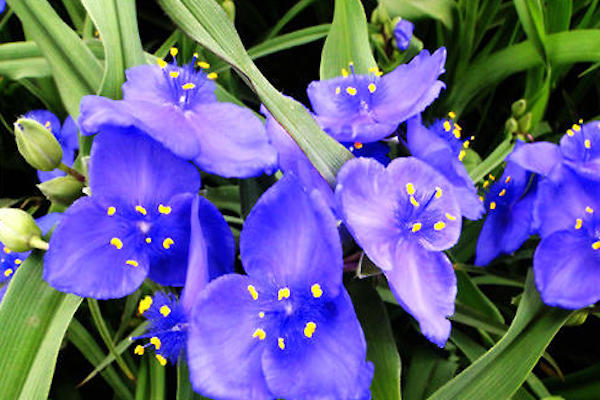
The flowers of this plant are very brightly colored, purple with a hint of blue, and blue with a hint of purple, one could say it is enchantingly beautiful; at the same time, the leaves are also very slender and emerald green. Since its form is so attractive, it can naturally be grown as an ornamental plant.
For this reason, people keep it as a potted plant indoors for viewing, such as placing it on a bookshelf or on a coffee table; besides its ornamental value, it can also serve as a green plant to purify the air.
Besides growing it alone, it can also be grown together with other plants for a better ornamental effect. For example, Tradescantia is usually grown together with Iris longifolia, because these two plants are complementary in appearance, so when grown together they can highlight their respective characteristics and look even more beautiful when displayed.
After reading the above introduction, I believe everyone has a deeper understanding of Tradescantia. First, it is not toxic and can be grown with peace of mind. Second, it also has high medicinal value and is a commonly used herb in traditional Chinese medicine.
For more professional agricultural science and technology news, please scan the QR code to follow WeChat: NongXunNET

Please indicate the source when reprinting.