A Detailed Guide to Apricot Tree Pruning Times and Methods
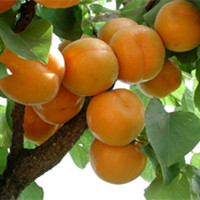
Pruning an apricot tree is an important technique in fruit tree management, referring to the practice of cutting away branches and thinning out the tree's structure to balance growth and fruiting. Apricot trees have relatively strong bud-break and branching ability, so if left unpruned for a long time they readily develop tangled branches and a congested inner canopy, which leads to poorer ventilation and light penetration and a decline in fruit quality. Proper pruning can shape a good tree form and improve light conditions, laying the foundation for stable yields and high quality.
Apricot trees are generally pruned mainly during the winter dormant period, when the tree's nutrients have returned to the roots, pruning has less effect on tree vigor, and it is easier to observe and organize the tree's structure. During the growing season, supplementary pruning can be carried out as needed, such as bud rubbing, pinching, and thinning out overly dense new shoots, to help control excessive vigor and promote flower bud formation. Combining winter pruning with summer pruning usually gives better results.
Common pruning methods include heading back, thinning out branches, renewal pruning, and leaving branches unpruned. Heading back can promote the sprouting of new shoots and develop fruiting branch groups; thinning out is used to remove diseased, pest-damaged, crossing, and overly dense branches to open up the canopy; renewal pruning suits overly long or drooping branches and helps restore vigor. When training the tree, forms such as the natural open-center shape or the delayed open-center layered shape can be used, and a clear hierarchy of main and secondary branches is more conducive to light capture.
Apricot tree wounds heal relatively slowly, so after pruning, larger cuts should be coated with a protective dressing to prevent pathogen entry and gummosis. Tools should be sharp and disinfected beforehand, and cuts should be smooth to avoid tearing the bark. The amount pruned should not be too drastic; it should be adapted to the individual tree, leaving more unpruned growth on vigorous trees and moderately renewing weak trees, gradually adjusting tree vigor, and never over-pruning all at once.