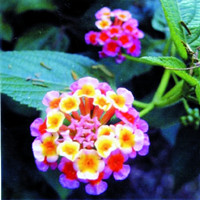
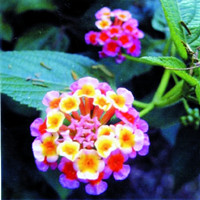
Lantana is an ornamental shrub with changeable flower colors, suitable for courtyard potted care
Lantana, scientific name Lantana camara, is an evergreen shrub of the genus Lantana in the verbena family, native to tropical America, and is now cultivated or naturalized in many areas of southern China. It is called lantana because the small flowers on the same inflorescence continually change color as they open, with yellow, orange, red, pink, purple and other colors often appearing at the same time on a single flower ball, looking very lively.
Its branches are often four-angled and bear short downward-curving thorns, and its leaves are opposite; when crushed they have a distinct special odor, so among the people it is also called stinky grass and dizzy flower, and it also has other aliases such as five-color flower and ruyi grass. Lantana has a very long flowering period, and in warm climates it can be seen in flower almost all year round, making it a very popular flowering plant for flower beds, flower borders and balcony pots.
In terms of care, lantana likes warmth and sufficient sunlight; the more light it gets, the more often it blooms, while long-term shade easily leads to leggy branches and fewer flowers. It is drought-tolerant and afraid of waterlogging, so watering can be done by letting the soil dry before watering again; proper pinching during the growing season can make the plant shape fuller. It is not cold-tolerant in winter, and potted plants in northern areas need to be moved indoors to overwinter; propagation is mostly done in spring and autumn by taking healthy branches for cuttings, with a relatively high survival rate.
It should be noted that the whole lantana plant is toxic, and accidentally eating the leaves or unripe fruits may cause discomfort, so households growing it should prevent children and pets from biting it. At the same time, its adaptability and reproductive capacity are very strong, and in some southern areas it is already an invasive plant; when planting in the ground it is best to control its spread and promptly clear away remaining plants, while potted cultivation is relatively easier to manage.