The dawn redwood is a living fossil of the plant world, a rare deciduous tree unique to China
The dawn redwood (Metasequoia glyptostroboides) is a tall deciduous coniferous tree and a relict plant unique to China, long known as a living fossil of the plant world. It was once thought to have gone extinct long ago, until it was rediscovered in the 1940s by a stream in the mountainous area of Hubei, causing a sensation in the world of botany. Today the dawn redwood is listed as a national first-class key protected wild plant, and it has been introduced and cultivated both in its place of origin and in many parts of the world.
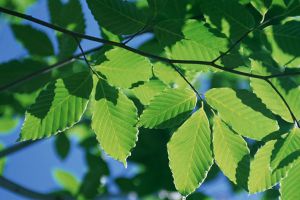
In appearance, the dawn redwood has a straight, upright trunk and a crown shaped like a pointed tower. Its lateral branchlets are arranged in spreading feather-like rows, and its tiny linear leaves are paired, looking from a distance like layer upon layer of feathers. In spring and summer the foliage is fresh green, turning gradually to reddish brown in autumn, making it highly ornamental. Its cones are nearly spherical and dark brown when ripe, borne at the tips of the small branches.
In terms of growing habits, the dawn redwood likes sunlight and a warm, humid climate, stands out for its tolerance of wet conditions, and is suited to planting in places with deep soil and plenty of water. It has a well-developed root system, grows fairly quickly, adapts easily and is not difficult to care for; in routine care, simply keep the soil moist and avoid prolonged drought.
In terms of use, the dawn redwood is often planted as a street tree, a shade tree and a waterside landscaping tree. Planted in rows, it looks neat and spectacular, and its autumn color change is a sight in itself. At the same time, as an ancient relict species, it also has important value in paleobotany and the study of plant evolution.
Related reading