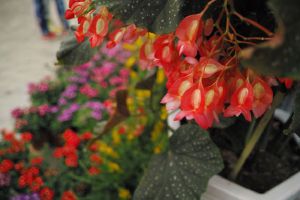
An Introduction to Common Begonia Varieties and How to Care for Them
Begonia is the collective name for plants in the genus Begonia of the family Begoniaceae. The range of species is extremely rich, including both flowering types prized for their blooms and foliage types valued for their leaves, and they are common ornamental flowers in courtyard landscaping and indoor pot culture.
Its leaves are mostly lopsided heart-shaped or ovate, asymmetrical on the left and right sides, which is an important feature for identifying begonias. Commonly cultivated varieties include wax begonia, tuberous begonia, rex begonia, cane begonia, Rieger begonia and Begonia 'Star Point', among others, with flower colors covering a wide choice such as red, pink, white and orange, and the leaves of some varieties also carry markings, making them highly ornamental.
In terms of care, begonias prefer a warm, humid, semi-shaded environment; they fear intense direct sunlight and also fear waterlogging that rots the roots. When cultivating them, choose loose, fertile soil with good drainage, and follow the principle of watering when dry and letting it dry out between waterings; during the growing season, keeping the potting soil slightly moist is enough. When the air is dry, you can spray water around the plant to raise humidity, and at the same time pay attention to ventilation.
For propagation, cuttings are the most commonly used method; stem cuttings and leaf cuttings both root fairly easily, and some species can also be propagated into new plants by sowing seeds or division. Begonias have a long flowering period and a compact plant shape, making them suitable for placement on a balcony, windowsill or living room and other spots with bright light but no direct sunlight; with proper management they can maintain a good ornamental state year-round.
Related Reading