Making wintersweet bonsai requires mastering material selection and shaping techniques
Wintersweet bonsai is a traditional tree-stump bonsai cultivated using wintersweet (Chimonanthus praecox) as the material. Its branches are aged and vigorous, its flowers are waxy yellow, and its fragrance is rich. It mostly blooms in deep winter, making it a potted plant with very high ornamental value in winter and spring. It has strong sprouting ability, tolerates pruning, and also has a fairly long lifespan; a well-grown old stump becomes more charming the longer it is cultivated.
To make wintersweet bonsai, you first need to obtain suitable material. You can grow it yourself by sowing, cuttings, division, or grafting, or you can directly buy a perennial plant with a thick trunk and evenly balanced branches. Potting is generally arranged after leaf drop and before spring budding. Choose loose, breathable, well-drained soil and a flower pot of moderate size. When planting, appropriately shorten overly long roots, water thoroughly after planting, and place it in a warm, sunny spot to recover.
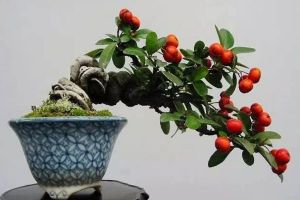
In the shaping stage, pruning is primary and wiring is supplementary. Wintersweet wood is relatively brittle, so when wiring, use gentle force. It is best to combine wiring with pruning to gradually develop the trunk, side branches, and branch pads, slowly forming styles such as slanting trunk, lying trunk, or forest. Pruning is mostly done after flowering. Promptly cut off crossing branches, overly dense branches, and leggy branches. This can both control the plant shape and concentrate nutrients, which helps flowering the following year.
For daily care, place it in a position with ample sunlight and good ventilation. Water by the principle of watering when dry and letting it dry between waterings, and avoid water accumulation in the pot. During the growing season and before flowering, you can apply dilute fertilizer frequently in small amounts to promote the development of branches, leaves, and flower buds. If the leaves turn yellow, it is often related to overwatering, insufficient light, or lack of fertilizer. Check the causes one by one and then adjust management. A properly cared-for wintersweet bonsai can produce flower buds year after year, and its ornamental value will continue to increase over the years.
Related Reading