How to Grow Gladiolus: Care Tips from Corms to Blooming
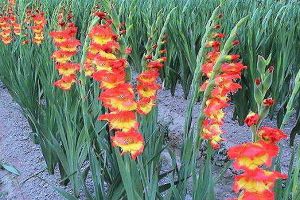
Gladiolus, whose scientific name is Gladiolus gandavensis, is a perennial bulbous flower of the genus Gladiolus in the family Iridaceae, named for its sword-shaped leaves. Its flower spikes open from the bottom upward in succession, and it comes in a rich range of colors. It is often used for cut flower production and courtyard cultivation, and has high ornamental value.
Gladiolus prefers a sunny environment. With sufficient light, the flower spikes differentiate smoothly and the colors are vivid; long-term shade tends to cause leggy growth or even failure to bloom. It likes a warm climate, fears hot, stuffy conditions, and also fears low temperatures and frost. In hot regions it can be shaded appropriately, while in winter attention should be paid to cold protection and warmth.
For cultivating gladiolus, choose loose, breathable, well-drained sandy loam; waterlogging easily causes the corms to rot. Water according to the principle of watering when dry and letting it dry between waterings, keeping the soil slightly moist. During growth and the booting stage, fertilizer mainly of phosphorus and potassium can be added to help the flower spikes grow thick and strong and the flowers bloom abundantly.
Corms are mostly planted in spring after temperatures rise, and the specific time can be arranged flexibly according to the local climate. The covering depth of soil is generally about two to three times the height of the corm, and after planting, water thoroughly. After flowering, cut off the spent flowers in time, and after the aboveground parts turn yellow and go dormant, dig out the corms, dry them, and store them in a ventilated, cool place to plant again the following year.
Common problems include corms failing to sprout, yellowing leaves, and lodging of flower spikes, mostly related to weak corms, overwatering, or insufficient light. Before planting, select plump, healthy corms free of disease spots, and properly disinfect the soil and corms to effectively reduce the occurrence of diseases later on.
Related Reading