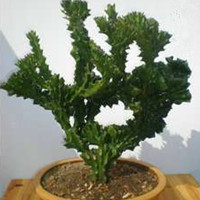
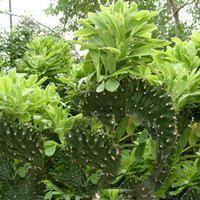
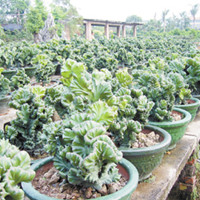
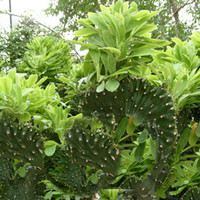
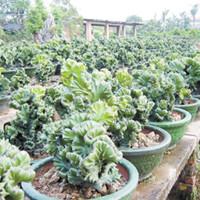
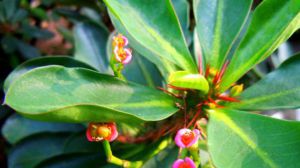
Golden Crown of Thorns (Euphorbia lactea cristata) is a succulent in the spurge family, drought-tolerant and easy to grow with high ornamental value.
Golden Crown of Thorns is a succulent of the genus Euphorbia in the spurge family, often regarded as a cristate mutation of the coral cactus (Euphorbia neriifolia cristata), and is also called golden crown or unicorn horn. Its stems are thick and fleshy, rising and falling in irregular cockscomb or mountain-like shapes, with bark that is bluish-green often tinged with yellow-white, giving it a strange yet steady form with a certain auspicious air. The plant is generally not tall, making it suitable for pot cultivation on balconies, windowsills or in halls.
This plant likes a warm, dry environment with plenty of sunshine; it is drought-tolerant and fears waterlogging, and it is not cold-hardy either. When planting, a loose, breathable sandy loam is preferable, and watering should follow the principle of not watering until dry, and watering thoroughly when you do, absolutely avoiding long-term water accumulation in the pot. During the growing season it can be kept in a spot with ample light; in the heat of midsummer give it some shade, and in winter move it indoors for warmth and control watering, keeping the potting soil on the dry side to help it overwinter.
Propagation is mainly by cuttings, usually carried out during the growing season. Cut healthy, vigorous stem sections, let the wounds dry, then insert them into slightly moist sandy soil and place them in a ventilated spot with diffused light, keeping the soil slightly moist; after some time they will take root and survive. Newly potted plants are in a slow-rooting stage and should not be exposed to strong sun or watered frequently, to avoid root rot.
Golden Crown of Thorns has a distinctive plant shape and is relatively undemanding to care for; folk tradition often regards it as an auspicious plant that guards the home and brings blessings, making it very suitable for long-term pot cultivation indoors. Note that its stems and leaves exude a white milky sap when broken; this sap is irritating and may cause discomfort if it touches the skin or gets into the mouth or eyes, so it is best to wear gloves when pruning or repotting, and in daily life it should be placed out of reach of children and pets.
Related Reading