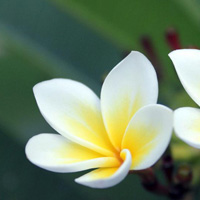
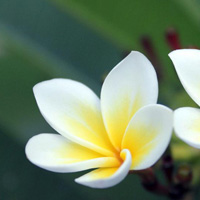
Plumeria is a tropical ornamental woody plant with a rich floral fragrance.
Plumeria is a deciduous small tree or shrub in the genus Plumeria of the dogbane family (Apocynaceae). It is native to tropical America and is now widely cultivated in southern regions of China such as Guangdong, Guangxi, Yunnan and Hainan. It gets its name because the petals are pure white and the center of the flower is pale yellow, resembling the colors of an egg, and it is a very popular tropical ornamental tree.
The plant is generally several meters tall, with thick, fleshy branches and large leaves that often cluster at the tips of the branches. The flowering period is mostly concentrated in summer and autumn, when the flowers open in clusters, with a clear, sweet and rich fragrance; the tree form is spreading and attractive, and even after the leaves fall in winter, the shape of the branches is quite ornamental. The common varieties are mainly white petals with a yellow center, and there are also types such as red plumeria, which bears red or pink flowers.
For care, plumeria prefers a sunny, warm and humid climate, and is drought-tolerant but afraid of waterlogging and cold. When planting, choose loose, airy soil with good drainage, and water so that the soil dries out between waterings. When low temperatures arrive in winter, the plant sheds its leaves and goes dormant; at this time reduce watering and pay attention to cold protection, and when temperatures rise again the following year, new buds will sprout again. Propagation is mainly by cuttings, which is simple and has a relatively high survival rate.
Besides its ornamental value, plumeria also has considerable practical value: the flowers can be dried and brewed as tea, and can also be used to extract essence. In some southern regions and parts of Southeast Asia, there is also a tradition of using the flowers in cooking or as temple offerings. It should be noted that it belongs to the dogbane family (Apocynaceae), and the white sap that flows out when the branches and leaves are broken is toxic, so it is best to wear gloves when pruning, wash your hands promptly after contact, and if there are children or pets at home, keep them from eating it by mistake.