A Detailed Guide to Growing Anthurium: Care Methods and Precautions
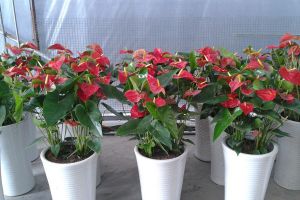
Anthurium, also known as flamingo flower, tailflower or painter's palette, is a perennial evergreen herbaceous plant of the genus Anthurium in the family Araceae, native to tropical America. What draws the most attention is actually the spathe, the waxy red bract that is often mistaken for petals, while the upright spadix in the center is the true flower. The anthurium has a compact form, with glossy green leaves, and the pairing of red flowers and green foliage is very striking.
Anthurium prefers a warm, humid, semi-shaded environment, and is tolerant of neither cold nor direct strong sunlight, so warmth must be maintained in winter to avoid frost damage from low temperatures. It has high requirements for air humidity, and when the environment is too dry, the leaf margins tend to scorch. For the growing medium, choose a loose, breathable, well-draining, slightly acidic substrate, which can be made by mixing peat moss with bark, perlite and similar materials.
In daily care, watering should follow the principle of letting the soil dry out before watering again, since standing water in the pot easily causes root rot. During the growing season, apply light fertilizer frequently, mainly a diluted balanced liquid fertilizer or slow-release fertilizer. Anthurium is commonly propagated by division, and for home care it is best placed by a window with plenty of scattered light, and prolonged exposure to strong sun must be avoided.
Common problems during care include failure to bloom and yellowing leaves, which are mostly related to insufficient light, unsuitable temperatures or a lack of nutrients. As long as the environment is stable and water and fertilizer are appropriate, the spathe of the anthurium has a very long ornamental period, making it both a popular indoor flowering plant and a common choice for cut flowers and festive displays.
Related Reading