Key Points for Growing Snow Peas and How They Differ from Sugar Snap Peas
The snow pea is an annual or biennial climbing herbaceous plant in the legume family, genus Pisum, and a variety of the garden pea. Its tender pods are the main part eaten, though the young shoots can also be eaten as a vegetable. Although its name contains "Holland," it did not originate in the Netherlands; it is generally believed to have originated along the Mediterranean coast and in western Asia, and got its name from the route by which it was introduced. Snow pea pods are thin and flat with a bright green color, and their crisp texture carries a faint, delicate sweetness. They are a common seasonal legume vegetable.
Snow peas and sugar snap peas are often confused with each other. Although both belong to the pea group, their form and the way they are eaten differ noticeably. Snow pea pods are thin and flat with small peas, and mainly the tender pod itself is eaten; sugar snap pea pods are relatively thick and plump with full peas, and both the pod and the peas can be eaten, with a more pronounced sweetness. Their cultivation and management methods are similar, and when choosing between them you can decide based on the texture you prefer.
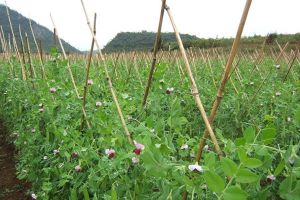
When growing snow peas, note that they prefer cool conditions and cannot tolerate high temperatures. They are usually sown in autumn and winter or in early spring, and loose, fertile, well-drained soil is suitable. After the seedlings emerge, trellises should be set up promptly to guide the vines, and watering should keep the soil moist but not waterlogged to avoid root rot. Avoid applying too much nitrogen fertilizer, lest excessive stem and leaf growth affect pod setting; during the flowering and podding stage, nutrients can be supplemented appropriately, and attention should also be paid to controlling common pests and diseases such as powdery mildew and aphids. Picking the tender pods promptly can also encourage the plant to keep flowering and setting pods.
Snow peas can be eaten in many ways: stir-fried plain, stir-fried with garlic, stir-fried with cured meats, or blanched and served as a cold salad, all with a fresh, light flavor. Note that fresh beans such as snow peas should not be eaten raw or half-cooked; if not cooked through, they may cause gastrointestinal discomfort, so be sure to stir-fry or boil them thoroughly before serving so they are both safe and delicious.