An Introduction to the Characteristics, Growing Environment and Care Methods of the Yucca
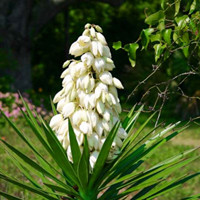
The yucca is an evergreen shrub of the genus Yucca in the family Agavaceae, also known as the yucca or pineapple flower. It originated in North America, and today it is cultivated in many regions of our country. Its stem is short and thick, and its leaves are sword-shaped, hard and upright, densely arranged at the end of the stem, with the whole plant form resembling an unfurled rosette. Every summer and autumn, the yucca sends up a tall flower stalk and produces strings of creamy-white flowers that hang down like bells, giving it high ornamental value.
The yucca likes a sunny, warm environment, and at the same time has strong cold and drought tolerance. It is not demanding about soil, and grows better in well-drained sandy soil. It is highly adaptable and can tolerate a certain degree of salinity and poor soil, so it is fairly common in southern courtyards and northern outdoor landscaping.
The yucca is relatively easy to care for. It should not be watered too much in daily care; keeping the soil on the dry side is enough, as waterlogging easily causes root rot. During the growing season, a little diluted fertilizer can be applied appropriately to make the leaves more deep green and glossy, and it also helps flowering. Propagation is mostly done by division or cuttings, which is simple to carry out and gives a fairly high survival rate.
In landscape applications, the yucca is evergreen all year round with an upright plant form, and is often placed in flower beds, along roadsides and in courtyards. It is also suitable for growing in pots on balconies or at doorways. It also has strong resistance to harmful gases, making it an excellent material for landscaping in industrial and mining areas. If the leaf tips are usually found dry and yellowing, it is mostly related to overwatering, insufficient light or poor ventilation; simply adjusting the care method in time will allow it to gradually recover.