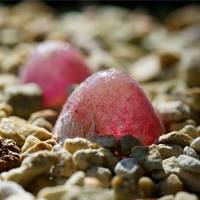
The succulent "light bulb" has a unique form, and the key to caring for it lies in light and watering
The succulent light bulb is a small succulent plant in the genus Conophytum of the family Aizoaceae, native to the gravelly areas of South Africa. Its plant form is round and plump, with a smooth and translucent skin. In seasons with ample sunlight and a large temperature difference, it often takes on colors from pink to rose red, looking just like little light bulbs, hence the name. The mature plant is not large individually, yet it readily forms clusters, and when packed densely together it has high ornamental value.
Its growth habits differ from common summer-type succulents: it mainly grows in cool seasons such as autumn, winter and spring, and enters dormancy when temperatures are high in summer. During dormancy, the outer old skin gradually dries up, forming a papery shell similar to an onion skin that wraps the plant; this is a normal self-protection phenomenon. When the weather turns cool, new leaves develop inside the old skin, then shed the skin on their own, restoring a plump and translucent state.
Daily care should focus on the three keys of light, soil and water. The soil mix should be mainly loose, breathable granular soil to ensure good drainage and avoid water accumulation in the pot. Watering follows the principle of not watering until dry; during dormancy, water must be strictly controlled or even cut off entirely, otherwise root rot and turning to mush easily occur. In terms of light, more sun in autumn and winter makes it easier to color up and reach its best state, while in midsummer it needs appropriate shading and enhanced ventilation to prevent damage caused by stuffy heat and humidity.
Common problems mainly center on rotting bulbs, leggy growth and handling during the skin-shedding period. Watering too frequently or an unventilated environment are the main causes of rotting bulbs; once discovered, watering should be stopped promptly and ventilation improved. Insufficient light will make the plant grow leggy and turn green, with a loose plant form. During the skin-shedding period, do not tear off the old skin by hand; just wait for it to dry up and fall off naturally. Precisely because of its unique appearance and the certain challenge of caring for it, the succulent light bulb has always been a popular variety in the eyes of succulent enthusiasts.
Related reading