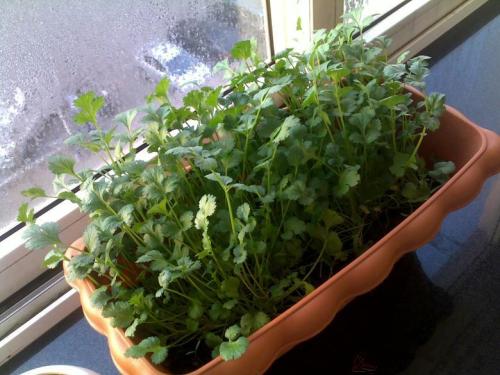
Cilantro Varieties: Characteristics and Per-Mu Yields of White-Flower Cilantro and Purple-Flower Cilantro
Do you like eating cilantro? Then do you know what varieties of cilantro there are, and have you learned about white-flower cilantro and purple-flower cilantro? If not, let's take a look together at what characteristics these two kinds of cilantro have?
White-flower cilantro, also known as green-stem cilantro: this is a local variety from the suburbs of Shanghai. Its characteristics are a strong aroma, late maturity, cold tolerance, preference for fertile soil, and few pests and diseases, but its yield is low, at 800~1,000 kg per mu. In Shanghai it can be sown throughout the year, but sowing from November to March of the following year is preferable. When sowing from April to August, a shed must be built for shade and the seed broadcast; before sowing, the fruits should first be slightly crushed to help them sprout and emerge. Use 4~5 kg of seed per mu. Harvest 60~70 days after sowing. The spring yield is 750 kg per mu, and the autumn yield is 600~700 kg per mu.
Purple-flower cilantro, also known as purple-stem cilantro: its characteristics are a short plant that grows flat to the ground. The plant height is about 7 cm, with a spread of 14 cm. It is an early-maturing variety, ready to eat about 30 days after sowing. It is cold-tolerant, strongly drought-resistant, and has few pests and diseases, with a general yield of about 1,000 kg per mu. Its yield is somewhat higher than that of white-flower cilantro.
After looking at the characteristics of these two kinds of cilantro, which one do you prefer?