What are the characteristics of common grape varieties: Kyoho, Delaware, and Moon Drops?
Humans have been cultivating grapes for thousands of years, and different regions around the world have different ways of eating them. Grapes have always been used to pair with cheese, make jam, extract juice, and produce wine. To date, there are over ten thousand varieties of grapes, of which 1,300 are made into wine.
You might not know that this plump, round plant of the Vitaceae family produces fruit that belongs to the berry category, while blackberries, raspberries, and strawberries actually do not (but that is another article). Here we introduce the common grape varieties on the market and how to enjoy them.
Kyoho Grape KYOHO
In the early 20th century, Japanese growers crossbred the dark blue Concord grape from the United States to cultivate the Kyoho grape, which has now become the most popular grape variety in Japan, accounting for one third of Japan's total grape production. The Kyoho grape has a dark purple (almost black) skin that is glossy and slightly bitter, so it is usually peeled before eating. The grape itself is large, juicy, and sweet, and is generally enjoyed as fresh fruit.
Concord Grape CONCORD
Deep purple, close to a soft blue, with skin resembling a blueberry. The Concord grape is one of the most widely eaten varieties on the market because it is very easy to peel, allowing you to easily avoid the tartness of the skin. With just a gentle squeeze, the skin pops open to reveal plump, juicy, sweet flesh, making Concord the most suitable grape variety for making jelly, juice, fruit tarts, soda, and candy. It is sometimes also used to make Kosher-certified wine.
Sauvignon Blanc Grape SAUVIGNON BLANC
Sauvignon Blanc is a green-skinned grape variety originating from the Bordeaux region of France. The early-ripening grape is suitable for making aromatic dry white wines. Today, this variety is grown in many wine regions around the world, including France, Chile, Canada, Australia, New Zealand, and South Africa. The flavor of Sauvignon Blanc carries fruity, grassy, and tropical notes, depending on the climate.
Delaware Grape DELAWARE
When ripe, the Delaware grape has a dark red skin with a soft texture. Although the skin is red, this grape is not used to make red wine, but is often used to make sweet wine, sparkling wine, rose wine, and white wine. Like the Concord grape, Delaware is very easy to peel.
New Pione Grape NEW PIONE
Originating from Okayama Prefecture, Japan's largest grape-producing region, the New Pione grape was created by crossbreeding the Kyoho grape with the Cannon Hall Muscat grape. The deep blue-purple grape is firm and plump, with flesh resembling jelly, and is sweet and juicy. New Pione is also known as Black Pearl, and in some Japanese gourmet markets, it sells for as much as 200 Hong Kong dollars per half kilogram.
Riesling Grape RIESLING
Unlike the green-skinned Sauvignon Blanc or Chardonnay, the Riesling grape is white. Originating from the Rhine region of Germany, Riesling is known for its rich floral aroma, which adds flavor to white wines. Among wines made from Riesling, the most expensive is late-harvest sweet wine; delaying the harvest allows the grapes to reach higher ripeness and sweetness, with a more intense flavor.
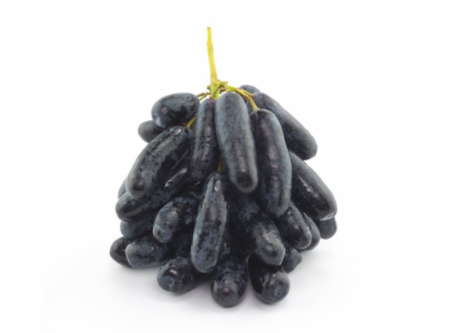
Moon Drops Grape MOON DROPS
Produced by The Grapery in Bakersfield, California, USA, this legendary vineyard grows a variety of specialty grapes, including "Tear Drops" and "Cotton Candy". The Moon Drops grape has thin, crisp skin, and its elongated fruit can be cut in half; it is seedless, juicy, and crisp in texture.